AI Product Development Services
Build AI Products Around Real User and Business Needs
Our AI product development services help product and technology leaders turn a promising opportunity into a product ready for real users. WiserBrand brings product strategy, UX design, AI and machine learning engineering, and software development into one delivery team for standalone AI products and substantial AI features within existing platforms.
We define the product outcome, validate the riskiest assumptions, design the experience and architecture, build and integrate the solution, and prepare it for launch and continued improvement. The finished product has a usable experience, measurable performance, clear operating responsibilities, and a roadmap informed by user and business evidence.

4.9/5 client rating

Recognized growth company

Experience with GPT models

Experience with Claude models

AI Agents for an Odoo-Based AC Filters Manufacturer
We implemented AI agents around Odoo to accelerate custom quotes, surface operational exceptions earlier, and reduce manual work across ecommerce and manufacturing.

AI HR Assistant for a Large IT Company
We deployed an AI HR assistant that cut CV review time by 60% and saved a large IT company’s recruiting team approximately 20 hours per week.

AI Refund and Return Agent for Fashion Retailer
We built an AI refund and return agent that helped a fashion retailer resolve nearly half of routine refund tickets automatically and cut eligible processing time to under 90 seconds.
AI Product Development Services We Offer
We cover the product decisions, design work, engineering, and operating capabilities required to move from an opportunity to a product that can be launched and improved. An engagement can begin with an early concept, an inherited prototype, or a live product that needs a substantial AI capability.

AI Product Strategy
Our product development consulting turns an idea, user problem, or feature hypothesis into a defined product opportunity. We examine the intended users, current alternatives, expected business value, available evidence, and the role AI should play before setting the delivery scope.
Includes:
- Product opportunity and value proposition
- User, market, and workflow findings
- AI suitability and build, buy, or partner assessment
- Business case and product success measures
- MVP scope and evidence-based roadmap

AI Product Design
Our AI product design services translate the opportunity into user journeys, interfaces, and testable interactions. Designers work with AI engineers to account for variable outputs, response time, confidence, source visibility, user feedback, permissions, and human review within the experience.
Includes:
- User journeys, information architecture, and product requirements
- Conversational, visual, or multimodal interaction design
- Feedback, confirmation, review, and exception states
- Interactive prototypes, usability testing, and design handoff

PoC & MVP Development
A proof of concept tests a critical technical assumption with representative data. An MVP combines the validated capability with enough product experience and software to test value with a limited user group. We define which form of validation matches the decision the team needs to make.
Includes:
- Data, model, retrieval, or integration experiments
- Functional prototypes for stakeholder and user review
- Quality, latency, cost, and feasibility findings
- MVP engineering and controlled user release
- Documented recommendation for the next investment decision

Data & AI Architecture
We design the product foundation around its data, quality, privacy, performance, cost, and operating requirements. Architecture decisions compare commercial models, open-source components, custom machine learning, retrieval, deterministic rules, and conventional software against the product’s constraints.
Includes:
- Data-source, access, and quality assessment
- Target architecture and data-flow design
- Model, platform, and hosting evaluation
- Retrieval, context, and knowledge design
- Identity, permissions, privacy, and security requirements
- Scalability, cost, portability, and support planning

AI/ML Development
Our machine learning product development work covers generative AI, predictive models, recommendations, natural language processing, document intelligence, computer vision, and agentic capabilities. We build the model or AI service together with the retrieval, rules, validation, and fallback logic required by the product.
Includes:
- Data preparation, feature engineering, and training pipelines
- Model configuration, fine-tuning, or custom development
- Retrieval-augmented generation and knowledge grounding
- Prompt, routing, tool-use, and validation logic
- Task-specific evaluation datasets
- Documented model services and product APIs

AI Product Engineering
Our AI product engineering services turn the selected AI capabilities into software people can use. We develop the interfaces, back-end services, workflows, accounts, administrative functions, and analytics required for a complete web, mobile, conversational, or enterprise product.
Includes:
- Front-end product interfaces and interaction states
- Back-end services, APIs, and application logic
- Authentication, roles, accounts, and administrative controls
- Notifications, approvals, handoffs, and exception flows
- Product analytics and operational telemetryAudit and review requirements

AI Integration & Modernization
We add AI capabilities to existing products and connect them to the data and business systems they need. The work can also modernize product components that limit the intended experience, performance, security model, or ability to release AI features safely.
Includes:
- Existing architecture and integration assessment
- AI service, API, and data-pipeline integration
- CRM, ERP, commerce, support, and knowledge-system connections
- Identity, permissions, and read or write boundaries
- Compatibility, resilience, failure handling, and migration planning

AI Quality & Governance
We define how the product will be evaluated, reviewed, and approved for release based on the impact of its features. Quality and governance requirements become testable product behavior through evaluation criteria, access limits, user confirmation, logs, escalation paths, and named owners.
Includes:
- Functional, integration, and regression testing
- Model, task-completion, and failure-behavior evaluation
- Security, privacy, permission, and data-use review
- Human oversight, source visibility, and fallback rules
- Release evidence, documented limitations, and audit records
- User acceptance and operational-readiness testing

MLOps & Scaling
We establish the delivery and operating practices required to update AI products under controlled conditions. After launch, product usage, model behavior, reliability, latency, and cost guide optimization and capacity decisions.
Includes:
- Model, prompt, retrieval, and data versioning
- Automated evaluation and deployment gates
- Monitoring, alerts, traces, and incident procedures
- Performance, capacity, and inference-cost optimization
- Rollback, recovery, retraining, and improvement planning
Our Results in Numbers
WiserBrand’s AI product work is supported by its product, design, software engineering, data, cloud, quality assurance, and delivery teams.
AI Product Development Case Studies
See how product strategy, experience design, AI engineering, and software delivery come together around a defined user problem and measurable product goals.


Discuss the Product Path With Our Team
Industries We Support With AI Product Development
The product scope, data, experience, and release controls change with the users and operating environment. We adapt the requirements, architecture, evaluation, and roadmap to the decisions the product will support and the consequences of an incorrect or unavailable output.
Retail & eCommerce
AI products for retail can serve shoppers directly or help merchandising, service, and operations teams manage large catalogs and changing demand.
Common product opportunities include:
- Guided shopping and product-selection tools
- Semantic search, recommendations, and personalization
- Catalog enrichment and merchandising copilots
- Customer-service and self-service products
- Demand, inventory, and return intelligence
Delivery priorities: Catalog accuracy, current inventory and pricing, customer-data permissions, policy enforcement, response time, and peak-load behavior.
Useful measures: Search success, conversion, return rate, service resolution, content quality, and feature adoption.

Financial Services
Financial AI products can support customers, analysts, advisors, risk teams, and operations specialists with research, document-heavy work, monitoring, and service interactions. The product experience should make source evidence, confidence, review status, and responsibility clear for decisions with financial consequences.
- Research and knowledge products with traceable sources
- Reconciliation, document review, and exception-management tools
- Fraud, anomaly, credit, or risk decision support
- Forecasting and financial planning products
Delivery priorities: Permission-aware data access, evidence retention, audit history, review thresholds, segregation of duties, and secure deployment.
Useful measures: Processing time, exception rate, review effort, false positives, completion quality, adoption, and cost per task.

Manufacturing
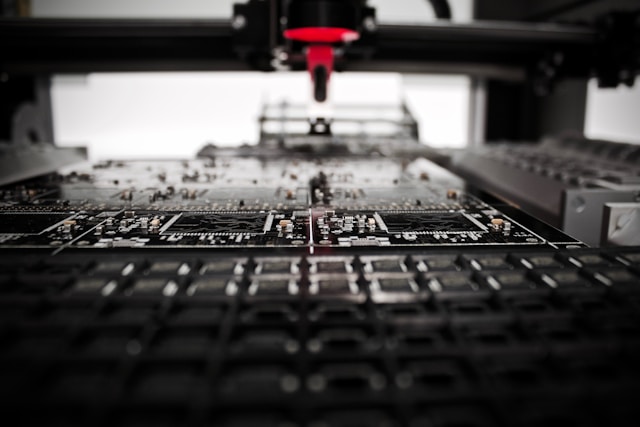
Manufacturing AI products can assist operators, engineers, maintenance teams, planners, and quality specialists while working with equipment data, technical documents, ERP and MES records, and site-specific procedures.
- Visual quality inspection
- Predictive maintenance and equipment-health products
- Production planning and forecasting
- Configuration and custom-quoting tools
- Technical knowledge and operator-assistance products
Delivery priorities: Equipment, MES, ERP, and quality-system integration; plant connectivity; latency; degraded or offline behavior; safety boundaries; and operator approval.
Measures should match the product and may include inspection coverage, defect escape rate, downtime, planning or quote time, throughput, and adoption.
Logistics & Supply Chain
Logistics products draw on frequently changing order, inventory, location, carrier, warehouse, and external-event data. They can support planners, warehouse teams, dispatchers, service teams, and customers across connected decisions.
- Demand, inventory, and capacity planning
- Route, load, and network decision support
- ETA, disruption, and shipment-risk prediction
- Shipment-document and exception-management products
- Customer visibility and service tools
Delivery priorities: Data freshness, event volume, ERP, WMS and TMS integration, carrier interfaces, latency, exception ownership, and reliable behavior when a source is delayed or unavailable.
Useful measures include forecast accuracy, on-time performance, delay-detection lead time, planning effort, exception-resolution time, and cost per shipment.

SaaS & Digital Platforms
SaaS companies can introduce AI capabilities that help customers complete core tasks, understand their data, find information, create content, or coordinate multi-step work. The feature should fit the existing product model, interface patterns, permissions, packaging, and support process.
- Embedded copilots and contextual assistance
- AI search and knowledge access
- Predictive insights and recommended actions
- Content, configuration, or data-transformation tools
- Agentic features for bounded product workflows
Delivery priorities: Tenant isolation, entitlements, usage limits, latency, inference cost, onboarding, feedback collection, and backward compatibility.
Product measures may include activation, task completion, time to value, feature adoption, retention, support demand, and cost per account.

Types of AI Products We Build
The right product format follows the user problem, available data, expected decisions, and acceptable level of automation. One product may combine several of these capabilities with conventional software, business rules, and human review.

Generative AI Products & Knowledge Copilots
Create products that help users find approved information, explore complex records, summarize material, generate drafts, or develop content within a defined workflow. The experience can include retrieval, source references, reusable context, feedback, and review paths suited to the task.

Agentic Product Experiences & Tools
Build bounded product features that interpret requests, gather context, use approved tools, and coordinate several steps toward a user-directed goal. Product design defines what the system can do, which actions require confirmation, how progress is shown, and where exceptions go.

Predictive Products & Decision Support
Use historical and current data to provide forecasts, classifications, risk indicators, anomaly signals, and next-best-action recommendations. The product presents predictions in the context of the decision, with suitable explanations, thresholds, feedback, and performance monitoring.

AI Search & Personalization
Help customers or employees find relevant products, content, records, and next actions through semantic retrieval, behavioral signals, catalog information, and business rules. The experience can adapt to user intent while preserving authoritative product data and eligibility constraints.

Intelligent Document Products
Turn document-heavy work into a guided product experience for extracting, classifying, comparing, summarizing, and validating information from emails, forms, PDFs, scans, contracts, and operational records. Low-confidence or conflicting information can be routed to an appropriate reviewer.
Conversational AI Products
Develop text or voice experiences for support, onboarding, sales assistance, self-service, and internal knowledge access. Conversation design covers context, identity, tool access, supported requests, response quality, and transfer to a person when the product reaches a defined boundary.

Computer Vision Products
Apply image or video analysis to inspection, classification, visual search, damage assessment, object detection, and media operations. Product requirements define input quality, response time, evaluation thresholds, review rules, and how visual findings enter the user’s workflow.

Why Choose WiserBrand for AI Product Development
WiserBrand brings product strategy, experience design, AI and data engineering, software development, quality assurance, and delivery management into one product team. This structure keeps user needs, technical choices, release criteria, and commercial goals connected throughout the engagement.

Product & Engineering in One Team
Evidence Before Larger Investment

Architecture That Fits the Product

Responsible Product Behavior by Design

Measurable Product Decisions

Client Ownership After Launch
Trusted by Leading Brands








AI Product Development Engagement Models
The appropriate engagement model depends on the product’s maturity, the evidence already available, the capabilities of the internal team, and who will own day-to-day product decisions. Each model defines WiserBrand’s delivery responsibility and the client participation required to keep decisions moving.
Product Discovery & Validation Sprint
Clarify the target user, product value, AI feasibility, and initial release before committing to a larger build. The sprint turns an early concept or uncertain feature opportunity into evidence, requirements, and a practical next-step decision.
End-to-End AI Product Delivery
Assign a cross-functional team to design, build, integrate, test, and launch a defined AI product or major product capability. WiserBrand manages the delivery plan and coordinates product, design, AI, software, quality, and release work through operating handover.
Dedicated AI Product Engineering Team
Add a stable group of product, AI, software, and quality specialists to an ongoing roadmap. The team works with the client’s product leadership, delivery practices, and technical environment while retaining product and system knowledge across releases.
Discuss your goals, available data, and timeline with our team. We will identify the most practical starting point for your AI agent initiative.
Our AI Product Development Process
Our process connects product discovery, user validation, technical feasibility, engineering, and launch decisions. Each stage has a defined output and review point, while user feedback and AI evaluation continue throughout delivery. The schedule is set after scope review because timing depends on product maturity, access to users and data, integration complexity, control requirements, and the target release environment.
Users, problem, value, and success measures
Product demand, usability, and AI feasibility
Experience, system design, and delivery scope
Product software, AI capabilities, and system connections
Product quality, AI behavior, security, and readiness
Usage, performance, value, and improvement priorities
Discover & Define
1 WeekWe establish who the product serves, which problem it should solve, how people address that problem today, and which business objective supports the investment. Existing research, analytics, prototypes, technical assets, and stakeholder assumptions are reviewed so the team starts from available evidence.
- Approved product brief
- Target-user, problem, and current-alternative summary
- Baseline and product success measures
- Scope, assumption, risk, and decision-owner map
Validate & Prototype
1 WeekWe test the assumptions most likely to change the product direction or investment decision. Depending on the opportunity, this can include user interviews, experience prototypes, data analysis, model experiments, retrieval tests, platform evaluation, or a focused technical spike.
- User-research and prototype findings
- Data, model, retrieval, or integration feasibility evidence
- Early quality, latency, and cost findings
- MVP recommendation and unresolved-risk register
Design Product & Architecture
2-3 WeeksWe turn the validated direction into product requirements, interaction behavior, system architecture, data flows, and a delivery backlog. The design defines how the product responds to expected inputs, uncertainty, unavailable dependencies, unsupported requests, and actions that require review.
- Product requirements and acceptance criteria
- Detailed user journeys, interface states, and design specifications
- Target architecture, data flows, integration contracts, and permissions
- Evaluation, product analytics, and release plan
- Prioritized delivery backlog and operating-ownership model
Build & Integrate
1 WeekWe implement the product in working increments and review them with product owners and representative users. Interfaces, application logic, AI components, data pipelines, integrations, permissions, analytics, and operational tooling are developed as one release candidate.
- Integrated release candidate
- Production data pipelines and system connections
- Implemented feedback, approval, and exception behavior
- Product telemetry and automated checks
- Technical and operating documentation
Test & Launch
1 WeekTesting covers product requirements, AI behavior, difficult inputs, system failures, permissions, security, privacy, performance, accessibility, and user acceptance. Release decisions use the criteria agreed during product design, with known limitations and unresolved issues documented.
- Functional, integration, AI quality, usability, and security validation report
- User-acceptance decision
- Resolved-issue record and approved limitations
- Production rollout and rollback plan
- Monitoring, support, and recovery runbooks with named owners
Measure & Evolve
OngoingAfter launch, we compare actual product behavior with the agreed baseline and target measures. Usage patterns, user feedback, AI evaluation, incidents, latency, reliability, and operating cost guide decisions about improvement, expansion, maintenance, or retirement.
- Product, AI quality, operational, and business performance report
- User-feedback, exception, and incident analysis
- Reliability and operating-cost review
- Prioritized experiments, roadmap, and scaling decision
Technology for AI Product Development
Technology choices follow the product experience and its operating requirements. We evaluate expected quality, data sensitivity, response time, workload, cost, portability, release environment, and the client’s ability to support the product before selecting components.
Models & AI Capabilities
A product can use commercial, open-source, or self-hosted models for generation, prediction, classification, extraction, vision, speech, embeddings, and other tasks. The architecture may route different tasks to different models when that improves quality, latency, cost, or control.
- Foundation models
- Custom Machine Learning Models
- Embedding Models
- Classifiers
- Forecasting Models
Data, Retrieval & Pipelines
Products can work with structured records, documents, event streams, media, knowledge bases, behavioral data, and approved external sources. Data design covers ingestion, preparation, access, freshness, provenance, retention, and the path from source information to a product output.
- Relational and document databases
- Data warehouses
- Object storage
- Search indexes
- Vector retrieval
- Event streams
Product Applications & Orchestration
The application layer combines the user experience with product state, model calls, deterministic rules, tools, approvals, queues, retries, and exception paths. Keeping orchestration and business logic explicit makes product behavior easier to test, observe, and change as requirements evolve.
- Web and mobile applications
- Conversational interfaces
- Back-end services
- APIs
- Workflow state
- Rule engines
Cloud, Delivery & MLOps
The runtime and delivery approach reflect the client’s infrastructure standards, model-hosting needs, expected demand, availability targets, and support model. Environments and releases are designed so product and model changes can be tested, traced, deployed, and reversed under defined controls.
- Public or private cloud
- Client-managed infrastructure
- Containers
- Serverless services
- Accelerated compute
- CI/CD
Evaluation, Security & Product Operations
Evaluation and monitoring cover AI behavior, task completion, product usage, integrations, permissions, reliability, latency, and cost. The depth of testing and review follows the impact of the feature and the client’s security, privacy, and operating requirements.
- Evaluation datasets
- Automated checks
- Regression suites
- Traces
- Application logs
AI Product Integrations
AI products often depend on the systems that hold customer, product, operational, financial, and internal knowledge. Each connection defines authentication, data scope, permitted read or write actions, rate limits, logging, failure behavior, and recovery expectations.
Data & Analytics
- Operational databases
- Data warehouses and lakehouses
- Business intelligence platforms
- Event streams
- Analytics systems
- Knowledge bases
CRM & Sales
- Salesforce
- HubSpot
- Zoho CRM
- Pipedrive
Commerce & Product Operations
- Adobe Commerce
- Shopify
- WooCommerce
- Shopware
Customer Support
- Zendesk
- Gorgias
- Intercom
- Freshdesk
ERP & Business Operations
- Odoo
- Oracle NetSuite
- Internal business applications
Finance & Accounting
- QuickBooks
- Xero
- Property-management
- Banking and payment interfaces
- Accounting platforms
Productivity & Knowledge
- Microsoft 365
- Google Workspace
- Microsoft Teams
- Slack
- Calendars
- Spreadsheets
Get started with WiserBrand
Let’s begin your project journey
Prompt Response
We’ll contact you within 24 business hours to discuss your project
Exploratory Call
A 15-20 minute call to discuss your needs and goals
Tailored Proposal
Receive a custom proposal with recommended next steps
or
Pick a time that works for you, and let’s hop on a call
Frequently Asked Questions
Answers to common questions about product scope, validation, architecture decisions, cost, timing, security, quality, and post-launch ownership.
AI product development services cover the work required to turn a user or business opportunity into an AI-enabled product that can be launched and operated. The scope can include product discovery, validation, UX design, data and architecture decisions, AI and software engineering, system integration, evaluation, deployment, and post-release improvement.
AI-powered product development coordinates those disciplines around a defined user, product experience, success measure, and ownership model. An AI product development company may lead the complete lifecycle or provide selected capabilities alongside an internal product team.
Yes. A new product engagement can begin with opportunity research, product definition, and validation before moving into design and engineering. The result may be a standalone SaaS product, customer-facing application, internal product, or platform capability.
For an existing product, we review the current users, experience, architecture, data, analytics, release practices, and target outcome. The scope can add a contained feature, introduce a shared AI service across several features, or modernize part of the product where the current design limits the intended experience.
Validation focuses on the assumptions most likely to change the investment decision. Product evidence may come from user research, workflow observation, demand signals, prototype testing, or product analytics. Technical evidence may require data analysis, model evaluation, retrieval experiments, integration checks, or a focused proof of concept.
The findings define which assumptions have support, which risks remain, and what should be built first. The resulting recommendation may proceed with an MVP, revise the experience, narrow the use case, resolve a dependency, or stop before a larger build begins.
We compare the options against the product’s required quality, differentiation, data sensitivity, response time, expected usage, integration needs, cost, licensing, portability, and the team’s ability to operate the result. The decision can differ by component within the same product.
A product may combine a commercial foundation model, custom retrieval, proprietary application logic, third-party services, deterministic rules, and conventional software. Architecture work defines the responsibility of each component and how it can be evaluated or replaced.
Cost depends on the product’s current maturity, research and design scope, data condition, selected AI approach, number of user experiences and integrations, security and privacy requirements, evaluation depth, expected load, deployment environment, and post-launch support needs.
We estimate delivery after defining the initial product outcome and reviewing the main dependencies. The estimate separates WiserBrand’s work from applicable model usage, cloud, data, licensing, and third-party platform costs. A staged engagement can address a high-risk assumption before the full product scope is committed.
The timeline follows the product scope and available evidence. A contained feature for an established product with accessible data and systems has a different schedule from a new multi-user product that requires discovery, sensitive-data controls, several integrations, and formal release reviews.
After the initial scope review, the delivery plan identifies stage outputs, client inputs, external dependencies, review points, and release criteria. This makes the assumptions behind the schedule visible and allows the team to revise timing when evidence changes the product direction.
Product design defines which data the feature can access, how permissions are applied, what information is retained, and which actions are available to each user or service. Security and privacy requirements are carried into the architecture, integrations, test plan, release criteria, monitoring, and operating documentation.
AI quality is evaluated against representative tasks, difficult examples, unsupported requests, and defined failure conditions. Depending on the impact of the feature, low-confidence, sensitive, consequential, or unusual cases can require user confirmation, remain read-only, or route to a named reviewer.
Post-launch work compares actual product behavior with the agreed product, AI quality, operational, and business measures. Monitoring and review can cover adoption, task completion, user feedback, exceptions, model behavior, integration health, reliability, latency, and operating cost.
Findings become a prioritized product backlog for experience changes, model or prompt updates, retrieval improvements, data work, integration maintenance, and scaling decisions. WiserBrand can transfer operations to the client’s team or continue with monitoring, support, and controlled product releases.