Summary

Business Challenge
Standard CRM workflows were not enough for the way our leads arrived.
Real prospects arrived through the same channels as spam, vendor outreach, and newsletters. Reps either skimmed past valid leads or burned time on noise.
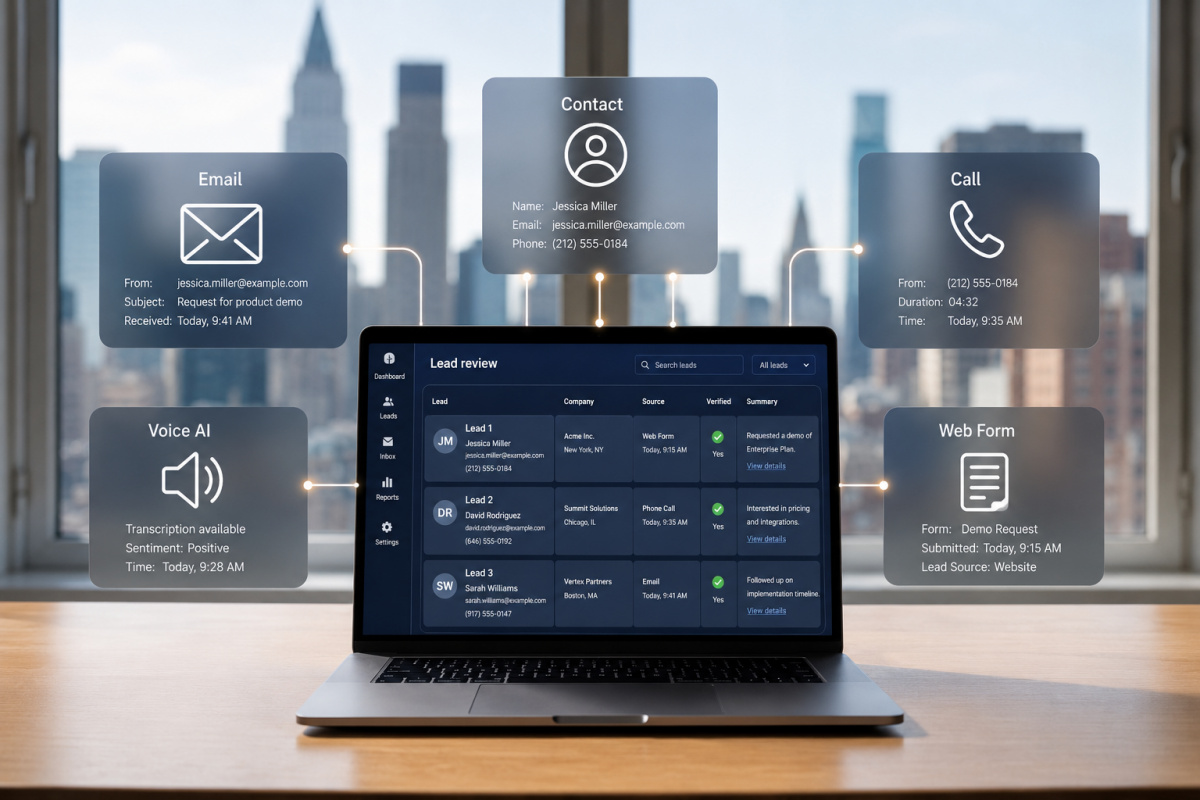
A meaningful share of leads arrived as conversational emails or voice calls handled by our AI assistant David, with no clean “company / role / ask” structure.
We needed one operating model for digital and offline intake that surfaced only validated, enriched leads and preserved the original context separately.
What We Built
Two coordinated AI workflows with one rule: AI handles extraction, validation, enrichment, and summarization. Sales keeps every approval decision.
1
Controlled intake across digital channels
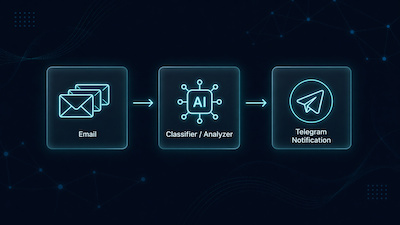
Every inbound message enters a filtering stage first. Spam, vendor outreach, and incomplete submissions are removed at the front door.
2
Structured field extraction
From every qualified message, the system pulls contact name, company, role, email, phone, domain, source context, and a short business summary. Conversational emails and voice transcripts become clean, scannable briefs.
3
Four-layer enrichment before sales review
Each qualified lead is checked against open web sources, matched to a likely LinkedIn profile, enriched through Apollo, and tagged with internal business context before the rep sees it.
4
Human review with structured briefs
The system produces a summary that answers four questions: who the lead is, why it matters, what has been verified, and what remains open. Sales approves or rejects from this brief.
5
Clean CRM commit with preserved context
Approved leads become concise CRM records. Original threads, voice transcripts, and longer context live as linked notes, one click away.
6
Business card workflow with a buffer table
Photographed cards from events run through the same enrichment, then stage in a buffer spreadsheet. The team triages there, and only chosen contacts move into CRM.
Project Results
The system replaced an inbox-driven workflow with a structured intake pipeline. Three changes are visible day to day.