Hire Machine Learning Developers
ML Engineers for Every Stage of the Model Lifecycle
Hire machine learning developers who build, deploy, and maintain models on your data. You can bring in one specialist, extend your team with several engineers, or add a dedicated developer who works inside your stack, tools, and processes.
Specialists cover every stage of that lifecycle, so you can fill one skill gap or run a full build. You choose the engagement that fits: a single developer, a team extension, or a scoped project delivered by WiserBrand. Models reach your environment with monitoring, documentation, and a retraining plan in place.


4.9/5 client rating

Recognized growth company

Experience with OpenAI GPT models

Experience with Anthropic Claude models

AI Adoption Pilot for a New Jersey Electrical Subcontractor
The client is a union electrical subcontractor with 60 people and around $20 million in revenue. Payroll and billing paperwork is rebuilt by hand between Procore and Sage 300 CRE, and payment waits on it.
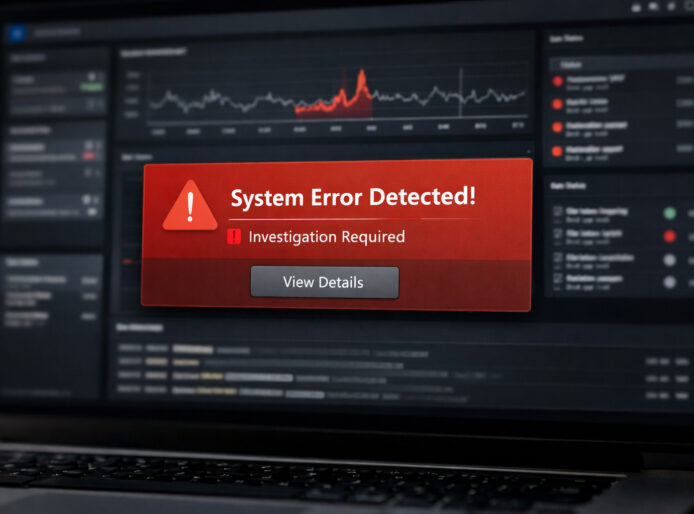
AI-Powered Incident Investigation
We built an AI-powered investigation agent that analyzes alerts, connects logs and traces across systems, and reconstructs incident timelines in minutes.

AI Search for Multi-Brand Auto Parts Retailer
We helped a multi-brand auto parts retailer reduce wrong-fitment returns by 35% by building an AI-assisted fitment intelligence layer.
Machine Learning Experts You Can Hire
Machine learning projects need different skills at different stages. Hire ML developers for the model work, pipeline engineers for the data behind it, and MLOps or testing specialists for the parts that decide whether a model survives production. You can hire for one area or several. Every specialist can join your team directly or work inside a WiserBrand-led project, depending on how much structure you need.

Custom ML Model Development
Model development starts with the decision you need to make, then works back to features, algorithms, and evaluation. Our developers frame the problem with your team, engineer features from your data, select and train candidate models, and tune them against a baseline. Nothing is accepted on accuracy alone: every model is measured on the metric your business tracks, such as lift, cost per decision, or false-positive rate.
You get a documented, reproducible model that your team can inspect and rerun. Training code, feature definitions, and evaluation results sit in your repository alongside the model itself.
Who You Hire: ML developers and machine learning engineers.
Hire When: You have a defined business problem and data, but no model that answers it.
Includes:
- Problem framing and success metric definition
- Feature engineering from your raw data
- Algorithm selection, training, and tuning
- Evaluation against business metrics
- Reproducible training code and model documentation scope

Data Preparation & ML Pipelines
Models are limited by the data feeding them, so pipeline work covers ingestion, cleaning, labeling, and the movement of data into training and inference. Hire ML pipeline engineers to build batch and streaming jobs, feature stores, validation checks, and dataset versioning that keep every training run reproducible.
The result is a data path you can trust. Each training run traces back to a known dataset version, bad records are caught before they reach a model, and adding a new data source takes days rather than weeks.
Who You Hire: ML pipeline engineers and data engineers.
Hire When: Your training data arrives through manual scripts and no one can reproduce a past model run.
Includes:
- Batch and streaming ingestion pipelines
- Cleaning and validation rules on incoming data
- Labeling workflows and annotation review
- Feature stores and dataset versioning for reproducible training

MLOps & ML Infrastructure
MLOps covers the environment a model lives in: training infrastructure, experiment tracking, model registries, and the pipelines that move a model from a commit to a served endpoint. Hire ML infrastructure experts to set up GPU resources, CI/CD for ML, containerized environments, infrastructure as code, and compute cost controls.
Your team gets a repeatable path from experiment to deployment, with every run logged and every model version traceable. Compute spend becomes visible per project, so GPU capacity goes where it earns its cost.
Who You Hire: MLOps engineers and ML infrastructure experts.
Hire When: Deployments depend on one engineer’s local setup and no one can reproduce them.
Includes:
- Training environments and GPU capacity planning
- Experiment tracking and model registry
- CI/CD for model builds and releases
- Containerized environments and infrastructure as code
- Code and data versioning for every model artifact
- Compute cost monitoring and controls

Model Deployment & Integration
Deployment work turns a trained model into something your product can call. Our ML engineers build real-time and batch inference services, expose models through APIs, and connect them to your application, CRM, ERP, or data warehouse. Releases go out behind A/B tests or shadow traffic, with rollback ready if a model underperforms.
Your product team gets a model endpoint with documented contracts and predictable latency, plus clear release control: you decide when a new version takes live traffic and when it goes back.
Who You Hire: ML engineers with backend development skills.
Hire When: A model is validated offline and waiting for someone to put it in front of users.
Includes:
- Real-time and batch inference services
- Model APIs integrated with your application or CRM, ERP, and data warehouse
- A/B tests, shadow releases, and rollback paths
- Edge deployment where the use case requires it
- Load and latency testing before launch

AI and ML Testing & Validation
Testing in ML covers two fronts: the data and the model. Hire AI and ML testers to write data quality checks, model evaluation suites, bias and fairness reviews, and edge-case tests that probe how a model behaves on inputs your training set never showed. After every retrain, regression tests confirm that earlier gains still hold.
You get evidence for release decisions instead of a single aggregate score. Failures surface in test runs, with the failing slice, the affected segment, and the metric that moved identified before users see them.
Who You Hire: AI and ML testers and QA engineers.
Hire When: Your team ships model updates without a repeatable way to check whether quality held.
Includes:
- Data quality and schema tests
- Model evaluation suites tied to business metrics
- Bias, fairness, and edge-case testing
- Regression tests after every retrain

Model Monitoring, Optimization & Retraining
A model that performed at launch will drift as customer behavior, pricing, and data sources change. Hire ML engineers to add drift detection, performance dashboards, and retraining schedules, then reduce latency and cost through quantization, distillation, or simpler architectures where they fit.
Live performance stays visible and tied to the metric that justified the project. Retraining runs on a schedule or a trigger, so a model that starts to slip is corrected before it affects decisions.
Who You Hire: ML engineers with MLOps experience.
Hire When: A production model has quietly lost accuracy, or inference costs have climbed month over month.
Includes:
- Drift detection on inputs and predictions
- Performance dashboards with alerting
- Scheduled and triggered retraining
- Latency and compute cost reduction

ML Consulting & Feasibility Assessment
Consulting answers the questions that come before a build: is this use case feasible, is the data ready, and what would it take. Hire machine learning consultants to assess use cases, review data readiness, weigh build against buy, estimate effort and return, and review architecture or a proof of concept.
You get a written assessment with a recommendation, an effort estimate, and the risks that matter, so the decision to invest or stop rests on evidence.
Who You Hire: Machine learning consultants and ML architects.
Hire When: Leadership has approved an ML budget but not the use case, or an existing model needs an outside review.
Includes:
- Use-case assessment and scoping
- Data readiness review
- Build versus buy analysis with ROI and effort estimates
- Architecture review and proof of concept

Applied AI & LLM Features
Applied AI covers language, vision, and generative features built alongside classical ML. Hire AI engineers for machine learning projects involving document extraction, image classification, search over internal knowledge, or LLM features such as retrieval-augmented generation and fine-tuning.
Features ship with evaluation sets suited to open-ended output, guardrails around what a model may answer, and cost controls per request. Where a smaller classical model does the job at a fraction of the cost, our engineers say so.
Who You Hire: AI engineers and ML engineers with LLM experience.
Hire When: A product team wants an LLM feature that has to be accurate, affordable, and answerable to a test suite.
Includes:
- Retrieval-augmented generation over internal documents
- Fine-tuning and prompt evaluation
- Output guardrails and fallback handling
- Per-request cost and latency controls
WiserBrand in Numbers
The ML developers you hire are backed by WiserBrand’s engineering, data, cloud, and QA teams, built over more than a decade of delivery work.
ML and AI Projects Our Engineers Delivered
These cases show ML and AI work moving from raw data to a running system, with results measured against the business metric the project started with. Each one covers the engineering around the model as well as the model itself.


Get Machine Learning Engineers for Hire Who Match Your Stack
Machine Learning Use Cases by Industry
ML methods are shared across industries, but data, regulations, and acceptable error rates differ. A fraud model in fintech and a demand model in retail may use similar algorithms, yet they face different rules, different data, and different costs for being wrong. Hire AI/ML developers who adapt models, validation, and deployment to your sector rather than applying a generic template.
Retail
Retail models decide what a customer sees, what gets stocked, and what a markdown costs in margin. Recommendations, demand forecasting, dynamic pricing, and search ranking all run on the same transaction data, and a model that is a week stale can overstock a seasonal line or miss a returning customer. The developers you hire connect these models to catalog, pricing, and order systems so the output reaches the storefront or the planner.
Typical projects: recommendations, demand forecasting, dynamic pricing, search ranking, customer segmentation, return prediction.

Finance
Finance models carry audit and explainability requirements that most ML work never faces. Fraud detection, credit scoring, and transaction monitoring have to be accurate, defensible to a regulator, and fast enough to stop a payment in flight. Document processing adds another layer: pulling terms from statements and contracts where a single misread field changes a lending decision. We build these systems with model documentation and review trails that hold up under scrutiny.
Typical projects: fraud detection, credit scoring, transaction monitoring, document processing, collections prioritization.

Professional Services
Professional services firms run on documents and billable time. Contract review, matter intake, claims triage, and property maintenance requests all produce high volumes of text that partners and account managers read manually. ML can classify, extract, and route that work: pulling clauses and dates from contracts, flagging claims that need a specialist, and matching incoming requests to the right team. Accuracy is reviewed by a human before anything reaches a client.
Typical projects: contract clause extraction, document classification, claims triage, matter intake routing, maintenance request classification, billing anomaly detection.

Logistics & Supply Chain
Supply chain models are judged on timing. Demand and ETA forecasts, route optimization, and inventory planning feed operational decisions that run on fixed schedules, and a late prediction is often worth less than a simple rule. Anomaly detection protects the same flow by flagging shipments, costs, and supplier behavior that fall outside normal patterns before they cascade into service failures.
Typical projects: demand forecasting, ETA prediction, route optimization, inventory planning, anomaly detection, supplier risk scoring.

Manufacturing & Energy
Plant and grid data arrives as high-frequency sensor streams, where the useful signal is often a slow trend buried in noise. Predictive maintenance, visual quality inspection, and energy load forecasting turn that data into maintenance windows, defect flags, and capacity plans. Our developers take on the sensor pipelines and labeling work these models depend on, and design for equipment that cannot be pulled offline for an experiment.
Typical projects: predictive maintenance, visual quality inspection, sensor anomaly detection, energy load forecasting, defect classification.
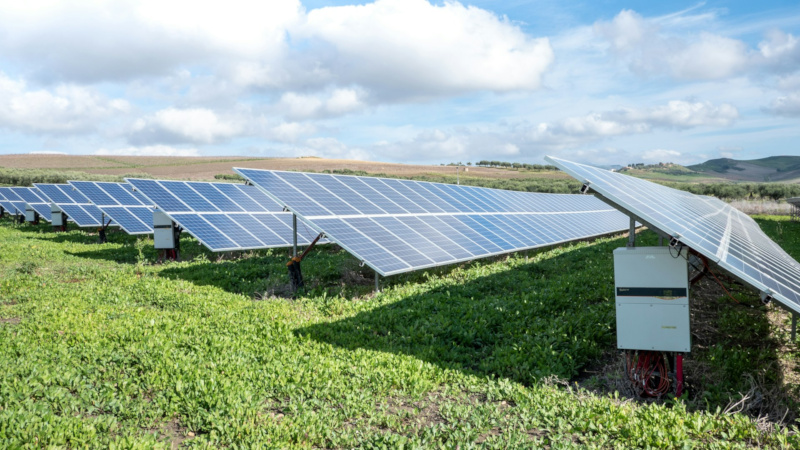
Construction
Construction data is messy and physical: site photos, daily reports, drawings, schedules, and equipment logs. ML turns that into earlier warnings, from visual progress checks against the schedule to defect detection in site imagery, cost and schedule overrun forecasts, and equipment failure prediction. Models here have to tolerate inconsistent labeling across subcontractors and work with the data that exists on site rather than the data a model would prefer.
Typical projects: progress tracking from site imagery, defect detection in photos, cost and schedule overrun forecasting, equipment failure prediction, drawing and document classification.

Machine Learning Challenges Our Developers Solve
Most ML projects stall on hiring gaps, data, or the move to production, not on the algorithm. The six problems below account for most of the stalled work we see, and each one has a practical fix when the right engineer is on the team.

Models That Only Work in Notebooks
A model scores well in a notebook and then sits there, because nothing in the stack can serve it, log it, or retrain it. The machine learning engineers you hire treat deployment as part of the build: serving code, a pipeline, and a rollback path ship with the model, so release day is routine.

Messy, Sparse, or Unlabeled Data
Training data arrives as exports, spreadsheets, and fields nobody has documented. Labels are missing for the cases that matter, and every retrain means another manual cleanup. Our pipeline engineers build ingestion, cleaning, and labeling workflows first, then version the datasets so each model run points back to a known, reviewed snapshot.

Accuracy That Drops After Launch
A model performs well in validation and then loses accuracy in production as customer behavior, pricing, and upstream data shift. Nobody notices until a business metric moves. Our ML engineers add drift monitoring, alerting, and a retraining schedule tied to the metric that justified the model, so degradation is caught in days rather than at the next quarterly review.

Slow Inference and Rising Compute Costs
Inference that takes seconds per request, or a GPU bill that climbs every month, can make a working model uneconomic. Our engineers profile where time and compute go, then cut both through batching, caching, quantization, distillation, or a simpler model that meets the same accuracy bar, so cost per prediction stays inside the budget the business case assumed.

No Clear Success Metric or ROI
Teams build a model, ship it, and then argue about whether it worked. Without a metric agreed before the build, there is no way to prove value or decide what to fix next. Our consultants and developers define the success metric with your stakeholders first, then wire model evaluation and reporting to that same number.

A Gap Between Data Science and Engineering Teams
Data scientists optimize models while platform engineers own the systems that run them, and handoffs happen over tickets. Work stalls in the space between the two. The developers you hire work in both worlds: they write model code that fits your repositories and pipelines, and they join your standups, reviews, and on-call rotation rather than working around them.

Why Hire Machine Learning Developers From WiserBrand
Hire machine learning experts from a company that ships software, data, and AI products every day, and your team inherits that delivery experience.

In-House, Pre-Vetted ML Engineers

Production-First ML Engineering
Engineers Who Work in Your Stack
Data, Cloud & QA Teams Behind Every Hire

Client-Owned Code, Models & Data
Scale the Team Up or Down
Trusted by Leading Brands








Ways to Hire Machine Learning Developers
The right engagement depends on whether you have an ML team, a defined scope, and technical leadership in-house. Each option below changes who owns priorities, who manages delivery, and how quickly work st
Dedicated ML Developer
Hire dedicated machine learning developers who work on your product and nothing else. Remote engineers align their day with your team’s hours, join your standups, use your repositories and ticket system, and report to your technical lead, so priorities come from your roadmap rather than a queue of client work. You get steady build velocity with one person accountable for it.
ML Team Extension
Add ML engineers, pipeline engineers, MLOps specialists, or testers to a team you already run. Your existing leads keep ownership of architecture and priorities, and the new people fill a specific gap: a pipeline nobody has time to build, a serving layer without an owner, or a testing gap before a release. Onboarding follows your conventions, not ours.
Project-Based ML Development
Hand WiserBrand a scoped project, such as a recommendation engine, a forecasting model, or a document extraction pipeline. A delivery manager runs the schedule, ML engineers build the model and its infrastructure, and QA tests both the data and the output. You agree on deliverables and milestones up front, and get a working system at each one.
Tell us what you need built, and we will point to the engagement that fits.
How Hiring Machine Learning Developers Works
Timing is predictable when you hire machine learning developers here: candidate profiles within 2-3 business days of agreeing on requirements, and a developer typically starting within 1-2 weeks. Stages 1-3 cover that hiring path. Stages 4-6 cover delivery, following your process in a team extension or WiserBrand’s in project-based work, with the same outputs either way.
Business Goal, Data, and Stack
Pre-Vetted Profiles in 2-3 Days
Access, Review, and First Sprint
Baseline, Experiments, Business Metrics
Serving, Testing, Controlled Rollout
Drift, Retraining, Team Size
Define the Problem and the Role
1-3 DaysA short call sets the target: the business goal, the decision the model should improve, the data you have, and the stack it has to fit. We ask about constraints you already know, such as latency limits, compliance reviews, or a fixed release date. From that, we write a role profile and recommend an engagement model, whether that means one developer or a team.
- Role profile with required skills
- Scope and success metrics
- Recommended engagement model
Match and Select Candidates
2-3 DaysWe match the profile against our in-house ML engineers and check each one’s recent work against your stack and domain. Candidate profiles arrive within 2-3 business days, with the skills, projects, and assessment results that matter for your case. You can interview the candidates yourself or rely on our technical assessment, and we adjust the shortlist if none of them fit.
- Candidate profiles
- Optional technical interviews
- Selected developer or team
Onboard and Audit the Data
3-5 DaysThe developer signs the NDA, gets access to repositories and environments, and starts with a data audit before writing model code. That audit checks coverage, label quality, and freshness, and flags what has to be fixed before training is worth the compute. The first sprint plan follows from those findings, so week one ends with a clear work list rather than an open-ended discovery phase
- Working access to systems and data
- Data readiness report
- First sprint plan
Build and Evaluate Models
2-6 WeeksThe team builds a baseline first, then iterates on features and models while logging every experiment. Evaluation runs against the business metric agreed in stage one, on data held back from training, and on the segments where errors cost the most. Models that do not beat the baseline are dropped early rather than carried into deployment.
- Validated model
- Experiment log
- Evaluation report
Deploy and Integrate
1-3 WeeksDeployment starts in staging and moves to a small slice of live traffic. Serving code, integration with your application or warehouse, and automated tests ship together, so the model has one release path instead of a manual sequence of steps. Rollout expands to full traffic when the metrics hold, and rollback stays available if they do not.
- Model running in production
- CI/CD pipeline for releases
- Deployment documentation
Monitor, Retrain, and Scale
OngoingAfter launch, the team watches drift, latency, and cost, and retrains on a schedule or when a threshold trips. Reviews happen on a cadence you set, with the team size adjusted as the roadmap changes: more engineers when new models enter the plan, fewer when the work settles into maintenance. Monitoring and dashboards stay with you either way.
- Monitoring dashboards
- Retraining plan
- Updated team plan
Machine Learning Technologies Our Developers Use
Tools follow the problem and your existing stack. Our developers adapt to your cloud, conventions, and deployment model rather than introducing a parallel toolchain your team would have to maintain. The categories below show what we typically reach for and why, with each choice justified by the workload in front of us.
Languages & Core Libraries
Python is the default for model work, and SQL stays the language of the warehouse, so developers write in both and keep transformations close to the data. Scala or Java appears where a pipeline has to live inside an existing JVM service. NumPy, pandas, and scikit-learn cover the numerical, tabular, and classical modeling work that most projects start with.
- Python
- SQL
- Scala
- Java
- NumPy
- Pandas
- Scikit-learn
ML & Deep Learning Frameworks
Framework choice follows the data type and the team that will maintain the model. Gradient-boosted trees handle most tabular problems faster and cheaper than neural networks, so XGBoost, LightGBM, and CatBoost come first unless the data is images, audio, or text. PyTorch is our default for deep learning, TensorFlow or Keras where your team already runs them, and Hugging Face Transformers for pretrained language and vision models.
- PyTorch
- TensorFlow
- Keras
- XGBoost
- LightGBM
- CatBoost
- Hugging Face Transformers
Data Processing & Pipelines
Teams hire ML pipeline engineers for this layer, and the tool choice depends on volume, latency, and how much of the flow is streaming. Spark handles large batch transformations, Airflow, Dagster, or Prefect schedule the jobs, and Kafka carries event streams that need handling before they land in storage. dbt keeps warehouse transformations versioned and reviewable, and Feast serves features consistently between training and inference.
- Apache Spark
- Apache Airflow
- Kafka
- Dbt
- Dagster
- Prefect
- Feast
MLOps, Experiment Tracking & Monitoring
This layer decides whether a model can be rebuilt six months later, which is why clients hire ML infrastructure experts for it. MLflow and Weights & Biases log runs and artifacts, Kubeflow runs pipelines on Kubernetes, and DVC versions data alongside code. Evidently AI and Great Expectations watch model and data quality in production, so problems surface as alerts rather than user complaints.
- MLflow
- Weights & Biases
- Kubeflow
- DVC
- Evidently AI
- Great Expectations
Model Serving & Deployment
Serving choices depend on throughput, latency budget, and whether the model runs in your cloud or on a device. Docker and Kubernetes package and schedule the service, FastAPI covers most REST endpoints, and NVIDIA Triton or BentoML handle high-throughput and multi-model serving. ONNX Runtime speeds up inference on CPU or trims a model for edge hardware.
- Docker
- Kubernetes
- FastAPI
- NVIDIA Triton
- BentoML
- ONNX Runtime
Cloud ML Platforms
Managed platforms make sense when your data already lives in one cloud and your team wants fewer moving parts. Amazon SageMaker, Google Vertex AI, and Azure Machine Learning cover training, tuning, and endpoints inside their own ecosystems, while Databricks and Snowflake keep model work next to governed warehouse data. We work in whichever of these you already use.
- Amazon SageMaker
- Google Vertex AI
- Azure Machine Learning
- Databricks
- Snowflake
LLM & Applied AI Tooling
LLM features bring their own stack: model access, retrieval, and evaluation. We reach for hosted models from OpenAI or Anthropic where output quality and latency justify the cost, open models such as Llama where data cannot leave your environment, and LangChain or a vector database for retrieval over internal documents. Evaluation harnesses are chosen per feature, since open-ended output needs its own tests.
- OpenAI
- Anthropic Claude
- Llama
- LangChain
- Vector databases
- Custom evaluation harnesses
Get started with WiserBrand
Let’s begin your project journey
Prompt Response
We’ll contact you within 24 business hours to discuss your project
Exploratory Call
A 15-20 minute call to discuss your needs and goals
Tailored Proposal
Receive a custom proposal with recommended next steps
or
Pick a time that works for you, and let’s hop on a call
FAQ
The answers below cover what buyers ask most about hiring ML developers, from timing and cost factors to data readiness and ownership.
A machine learning engineer builds and runs models in production, while a data scientist investigates data and frames the questions. Data scientists spend more time on analysis, experimentation, and statistical reasoning. Engineers own the serving code, pipelines, infrastructure, and monitoring that keep a model working after launch. The roles overlap in modeling, and the split varies by company. When you hire machine learning engineers through us, each profile states which side of that line the candidate works on, so you can match the gap you actually have.
Candidate profiles typically arrive within 2-3 business days of agreeing on requirements, and a developer can usually start within 1-2 weeks. The clock starts once we know the role, the stack, and the domain, so a detailed first call shortens the search. Client interviews add a few days if you choose to run them; if you rely on our technical assessment, that step is skipped. Specialized skills such as computer vision or MLOps take longer to match than general ML engineering roles, because the shortlist is smaller.
There is no single rate, because cost depends on seniority, specialization, engagement model, team size, and how long the work runs. A senior MLOps engineer on a multi-quarter deployment costs more than a mid-level model developer on a fixed scope, and a team extension prices differently from a project with milestones. We do not publish price lists. We scope the requirement on the first call and send an estimate that breaks down those factors, so you can compare it against your own budget.
Every candidate passes WiserBrand’s internal technical assessment before we propose them. The assessment covers coding, ML fundamentals, and a practical task close to the work they would do for you, and senior engineers review the results. In-house developers also bring a record of shipped projects we can check. Client interviews are optional: you can interview candidates yourself or rely on our assessment, and either path leads to the same shortlist.
Yes. When you hire remote machine learning engineers through WiserBrand, their working hours align with US business hours, so standups, reviews, and incident calls fall inside your day. Developers join your tools, repositories, and communication channels rather than a separate process. That overlap matters most in the first month, when onboarding and data access questions come up hourly. Afterward, it keeps reviews and release windows predictable for your team.
Your ML developers can join an existing data or engineering team and work inside its structure. In a team extension, your leads keep architecture and priorities, and our engineers take a defined slice of the roadmap or a missing skill such as pipeline work or MLOps. In a project-based engagement, we run delivery and coordinate with your team at agreed checkpoints. Both models assume shared repositories, shared reviews, and one definition of done, so the work is visible to your people from the first sprint.
You do not need a clean, labeled dataset to start, but you do need access to the raw data and someone who understands it. Most projects begin with a data audit that checks coverage, label quality, and freshness, and the first sprint often includes pipeline and labeling work. If the data cannot support the use case yet, the audit says so before training budget is spent. When you hire AI/ML developers for a project with no usable data, the honest first output is a plan for collecting it.
You own the models, the code, and the data. Work happens in your repositories and your cloud accounts, and deliverables include the training code, feature definitions, pipelines, and documentation needed to run everything without us. NDAs cover the engagement, and access is limited to the people on your project. If the engagement ends, nothing is held back: the monitoring setup, model artifacts, and deployment configuration stay with your team.
Yes. Monitoring, retraining, and optimization are part of the standard delivery cycle. After launch, the team watches drift, latency, and cost, retrains on a schedule or when a threshold trips, and reviews performance with you on a cadence you set. You can keep the same engineers for that phase, move to a smaller maintenance team, or take over with your own staff once the runbooks and dashboards are in place.
Choose a dedicated ML developer when you have a roadmap, technical leadership, and work that continues past the current model. Choose project-based delivery when the use case is defined, the outcome can be specified, and no one in-house can manage the build. A team extension sits between the two: your leads stay in charge and we fill a specific skill gap. If you are unsure, describe the goal and the state of your data on a call, and we will recommend one of the three with a reason.