AI Agent Development Services
Custom AI Agents Built Around Your Business Workflows
We design, build, and integrate AI agents that automate high-cost workflows across your existing systems. From document processing and customer support to operations, reporting, and internal requests, we help your team move faster without losing control.
Built around your data, tools, and approval rules, every agent is designed for practical use in real business operations with measurable ROI, human-in-the-loop controls, and a clear path from pilot to production.
Discuss Your AI Agent Project

4.9/5 client rating

Recognized growth company

Experience with GPT models

Experience with Claude models
Latest Case Studies View all

AI Agents for an Odoo-Based AC Filters Manufacturer
We implemented AI agents around Odoo to accelerate custom quotes, surface operational exceptions earlier, and reduce manual work across ecommerce and manufacturing.

AI HR Assistant for a Large IT Company
We deployed an AI HR assistant that cut CV review time by 60% and saved a large IT company’s recruiting team approximately 20 hours per week.

AI Refund and Return Agent for Fashion Retailer
We built an AI refund and return agent that helped a fashion retailer resolve nearly half of routine refund tickets automatically and cut eligible processing time to under 90 seconds.
Our AI Agent Development Offerings
We help companies move from “AI could help here” to a working agent that handles real workflow steps inside the business. Each engagement is built around the same goal: reduce manual effort, connect the right systems, keep sensitive decisions under human control, and measure the operational impact after launch.

AI Agent Consulting & Roadmap
We start by identifying where an AI agent can create measurable business value inside your current operations. Instead of beginning with a generic AI idea, we review the workflows that consume the most manual effort, slow down teams, or create avoidable operating costs.
The result is a practical roadmap that helps leadership decide what to automate first, what should wait, and what should not be automated at all. Each use case is evaluated against business value, technical feasibility, data readiness, operational risk, and expected ROI.
Includes:
- Workflow opportunity review
- Use case prioritization
- Data and system readiness assessment
- Integration complexity review
- Risk and compliance considerations
- ROI potential mapping
- Pilot roadmap and rollout sequence

AI Agent PoC & Pilot
A proof of concept tests technical feasibility. A pilot tests one defined workflow with representative data, limited permissions, and agreed evaluation criteria. We use the appropriate format based on what the business needs to confirm.
The work identifies where the agent completes tasks reliably, where it needs more context, and which actions should remain under human review before a wider deployment.
Includes:
- PoC or pilot scope
- Representative data and test cases
- Working agent workflow
- Human approval and escalation rules
- Quality and performance evaluation
- Production-readiness recommendations

Custom AI Agent Development
Our custom AI agent development services cover the architecture, workflow logic, instructions, retrieval, tool access, and interfaces required for a defined business process.
The implementation defines what the agent can access, which actions it can take, how results are checked, and what happens when information is missing or uncertain.
Includes:
- Agent and workflow architecture
- Prompt and instruction design
- Retrieval and memory setup
- Tool and API configuration
- Permissions and review points
- Evaluation, QA, and documentation

LLM & Agentic Workflow Development
We develop LLM agents that retrieve context, use approved tools, and complete multi-step tasks. Depending on the workflow, one agent may handle the full sequence or several specialized agents may coordinate extraction, validation, routing, and reporting.
For autonomous AI agents, we define the permitted action scope explicitly. High-impact, sensitive, or uncertain actions can require confirmation or escalation before execution.
Includes:
- LLM and model selection
- Single-agent and multi-agent design
- Tool-calling workflows
- Context and state management
- Routing and orchestration logic
- Action limits and fallback behavior

AI Agent Integration & Deployment
Our AI agent integration services connect agents to CRMs, ERPs, support platforms, knowledge bases, databases, email, document storage, and internal APIs. Read and write access is configured according to the workflow and user permissions.
AI agent deployment services cover environment configuration, release controls, logging, monitoring, and operational handover for the target infrastructure.
Includes:
- API, webhook, and data connections
- Authentication and permission setup
- Cross-system workflow implementation
- Deployment configuration
- Logging and monitoring setup
- Integration and operations documentation

Governance & Evaluation
We define how the agent is assessed and controlled before it handles production work. The setup covers access boundaries, approval rules, evaluation scenarios, fallback behavior, activity records, and ownership of exceptions.
Evaluation combines task-level quality checks with operational measures such as completion rate, processing time, escalation rate, latency, and cost where relevant.
Includes:
- Data and action boundaries
- Role-based access rules
- Human approval workflows
- Evaluation datasets and scenarios
- Failure and escalation handling
- Audit and review requirements

Optimization & Managed Support
After deployment, we review production performance, user feedback, errors, latency, usage, and operating cost. Findings are used to adjust instructions, retrieval, routing, model selection, integrations, and review rules.
Managed support can also cover production monitoring, issue investigation, documentation, workflow changes, and expansion into additional tasks or teams.
Includes:
- Production monitoring and issue review
- Quality and task-completion tracking
- Prompt, retrieval, and routing updates
- Latency and cost optimization
- Integration maintenance
- Improvement and expansion planning
Our Results in Numbers
Practical AI delivery is easier to trust when the team behind it has real engineering depth, cross-industry experience, and a process for moving from idea to production.
180+ Dedicated Professionals
20+ AI Agent Projects Delivered
$950M Clients’ Combined Annual Revenue
11 Years Hands-On Experience
AI Agent Development Case Studies
These projects show how AI agents can work with existing platforms, prepare context for employees, and handle defined workflow steps under established controls.


Have a Workflow in Mind?
Book a Strategy Call Discuss It With Our AI Team
AI Agents for Industry-Specific Use Cases
AI agents should reflect how work actually happens in your industry: the systems teams use, the rules they follow, the documents they handle, and the decisions that still need human review. We build agents around those operational details, so automation supports real workflows instead of adding another disconnected tool.
Retail & eCommerce
eCommerce AI agents can coordinate work across storefronts, support platforms, product catalogs, order records, inventory systems, and approved policies.
- Categorize multichannel support requests and prepare responses using order and customer context.
- Check products or parts across large catalogs and route proposed changes for approval.
- Flag inventory, fulfillment, refund, return, and order exceptions.

Manufacturing
Manufacturing agents can assemble information from ERP records, production data, inventory, service notes, and incoming documents before an employee makes the next decision.
- Prepare custom quote packets using specifications, material availability, capacity, and lead times.
- Identify production shortages, reservation conflicts, and purchasing delays.
- Organize maintenance or field-service requests with equipment and parts context.

Finance & Investment
Financial teams can use agents to organize document-heavy work and reconciliation while keeping accounting, credit, tax, legal, and investment decisions with qualified professionals.
- Index data-room files and link extracted figures to their source documents.
- Match invoices, schedules, expected payments, and transaction records.
- Route missing documents, conflicting figures, and payment exceptions for review.

Logistics & Transportation
Logistics agents can connect incoming documents, shipment records, transportation systems, and communication channels to reduce manual coordination around each load or delivery.
- Extract and compare order, rate, proof-of-delivery, and invoice data.
- Flag scheduling, dispatch, shipment, or service exceptions with supporting context.
- Prepare billing or customer-update tasks for employee review.

Software & IT
Software and IT companies can use agents across recruiting, employee support, technical operations, and customer-facing workflows.
- Compare CVs with active roles and prepare evidence-based recruiter summaries.
- Answer internal policy or tool questions from approved documentation.
- Structure technical tickets, bug reports, incidents, and customer feedback.

Professional Services
Professional-services teams can use agents to prepare intake, research, document, and administrative work while preserving expert review and client-specific access rules.
- Classify new requests and assemble relevant matter, account, or client records.
- Extract and compare information from contracts, statements, forms, and correspondence.
- Prepare sourced summaries, follow-up tasks, and exception queues for specialists.

Real Estate
Real estate and property teams can use agents to coordinate inquiries, property records, lease documents, maintenance requests, and transaction tasks across their existing systems.
- Classify property inquiries and prepare CRM handoffs with relevant listing and prospect context.
- Extract key dates, terms, and obligations from leases and transaction documents for specialist review.
- Route maintenance and service requests by property, urgency, issue type, and responsible team.

Types of AI Agents We Build
Different workflows need different agent capabilities. Some agents answer questions, some process documents, some monitor business signals, and others help teams make better decisions. We build each agent around a clear task, defined data access, measurable outcomes, and the right level of human oversight.
Workflow Automation Agents
Handle repetitive multi-step processes that currently depend on manual coordination between people, spreadsheets, emails, and business systems.
These agents can collect inputs, check required fields, update systems, route exceptions, and prepare status summaries for the team.

Customer Service & Retention Agents
Support customer-facing teams by handling routine requests, preparing response drafts, retrieving order or account context, and flagging cases that need human attention.
They are especially useful for high-volume support workflows such as order updates, returns, appointment requests, billing questions, and account changes.

Document Processing Agents
Extract, classify, summarize, and validate information from PDFs, forms, emails, contracts, claims, invoices, and other business documents.
These agents reduce manual review time and prepare structured information for the next step in the workflow.

Lead Qualification Agents
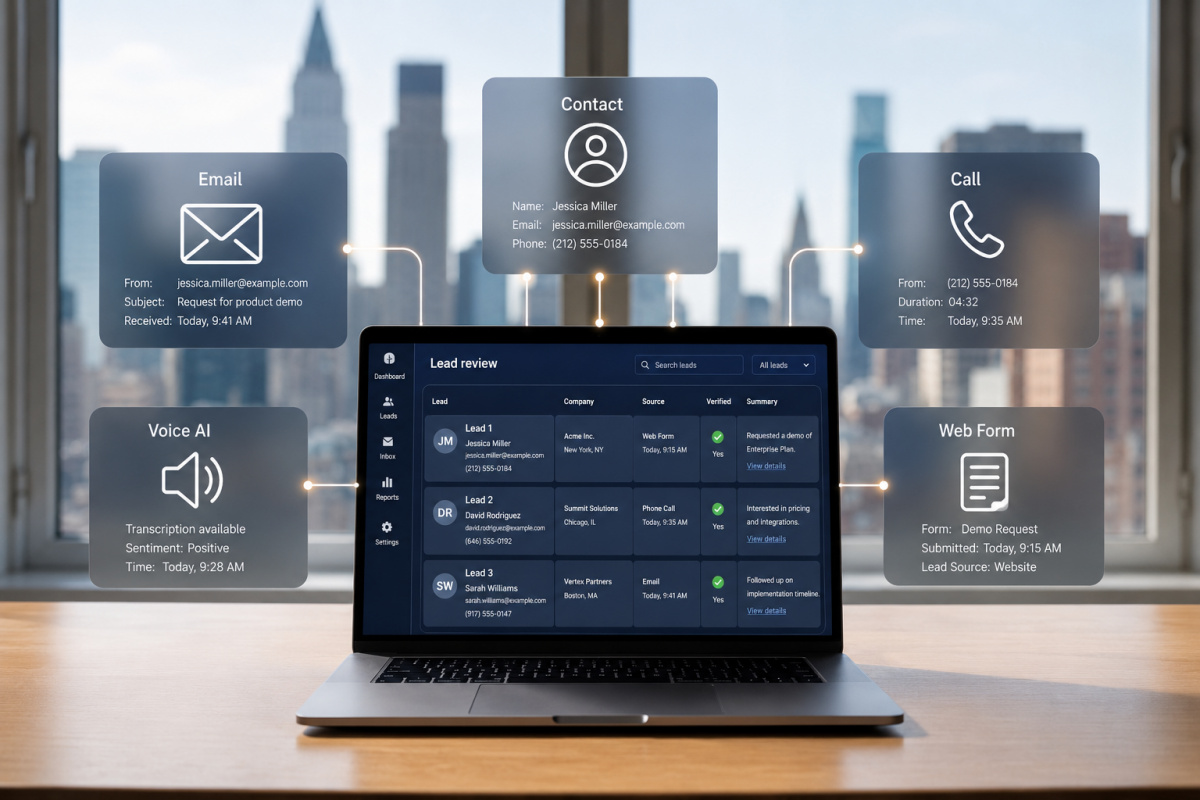
Help sales and marketing teams identify promising leads, enrich CRM records, summarize prospect activity, and route opportunities based on fit, urgency, and buying signals.
They can support faster follow-up without forcing teams to review every submission manually.

Recommendation Agents
Analyze customer behavior, historical data, product information, or business rules to recommend next-best actions, products, content, or service options.
These agents can support eCommerce personalization, customer success, sales enablement, and internal decision-making.
Predictive Analytics Agents
Use historical data and business patterns to forecast demand, churn risk, inventory needs, maintenance issues, or operational bottlenecks.
They help teams spot risks earlier and plan actions before problems become expensive.

Computer Vision Agents
Analyze images or video to support quality control, product categorization, visual inspection, damage assessment, or object detection.
These agents are useful when teams need to process large volumes of visual data with more consistency.

Fraud & Risk Detection Agents
Monitor transactions, behavior, documents, or workflow patterns to identify anomalies and escalate suspicious activity for review.
They do not replace compliance or risk teams, but they help surface potential issues faster and with better context.

Why WiserBrand
WiserBrand works as an AI agent development partner across workflow discovery, architecture, implementation, integration, evaluation, and post-launch support. Operations and technology stakeholders remain involved in scope, access, approval, and release decisions throughout delivery.

4+ Years of Experience in AI Software Development
Internal AI Hackathons and Workshops

Providing IT Services Since 2015

Inc. 5000 Top-Growing Company

Clients Ranging From Startups to Fortune 500 Companies

End-to-End Delivery From Pilot to Production
Trusted by Leading Brands
Partnering with forward-thinking companies, we deliver digital solutions that empower businesses to reach new heights.








AI Agent Development Engagement Models
The appropriate engagement model depends on how clearly the workflow is defined, how many initiatives are planned, and who will own day-to-day product and technical decisions.
Validate First Recommended start Best for One High-Impact Workflow
AI Agent Pilot
Test one priority workflow with a focused agent pilot designed to validate value, integration needs, and a clear path to scale.
Scale Continuously Best for Ongoing AI Roadmaps
Dedicated AI Team
Extend your capabilities with specialists who design, build, monitor, and improve multiple AI agent initiatives alongside your team.
Delegate Delivery Best for Complete Solution Delivery
End-to-End Delivery
Hand off strategy, implementation, integrations, deployment, and post-launch support for a defined AI agent solution.
Not Sure Which Model Fits Your Project?
Discuss your goals, available data, and timeline with our team. We will identify the most practical starting point for your AI agent initiative.
Schedule a call 30-minute discovery call. No commitment.
Our AI Agent Development Process
We move from a clear business problem to a working AI agent through a structured delivery process. Each step is designed to reduce risk, confirm the value early, and prepare the agent for real users, real data, and real operational conditions.
Discuss your AI project Typical launch: 6–10 weeks
Discovery
Workflow, baseline, systems, and risks
Blueprint
Agent logic, architecture, controls, and prototype
Development
Implementation, integrations, evaluation, and QA
Validation
Security, reliability, and controlled launch
Optimization
Monitoring, adoption, and improvement backlog
Discovery & Success Planning
1 WeekWe document the current workflow, task volume, people involved, systems of record, common exceptions, and the result the agent is expected to improve. Discovery also determines whether an agent is appropriate for the selected work.
Key deliverables
- Current-state workflow and ownership
- Baseline volume, time, cost, and error measures
- Data, system, and integration inventory
- Access, risk, and approval requirements
- Acceptance criteria and delivery constraints
Agent Blueprint & Prototype
1–2 WeeksWe design the agent’s workflow logic, model and tool choices, data sources, state handling, permissions, review points, and failure behavior. A prototype is used when the interaction or technical approach needs early validation.
Key deliverables
- Agent workflow blueprint
- Solution architecture
- Permissions, escalation, and fallback rules
- Prototype and evaluation plan where required
Development & Integration
3–5 WeeksWe implement the agent and connect it to the approved systems in development and test environments. Evaluation and QA run alongside implementation using representative tasks, missing or conflicting inputs, permission boundaries, and integration failures.
Key deliverables
- Agent implementation
- System, API, and data integrations
- Data preparation and retrieval setup
- Evaluation suite and automated checks
- Functional, integration, and failure testing
Validation & Deployment
1–2 WeeksBefore release, we review evaluation results, access configuration, logging, escalation behavior, and operational readiness. The initial deployment can be limited by users, tasks, or action permissions while the team observes production behavior.
Key deliverables
- Acceptance and regression evaluation
- Security and permission review
- Deployment configuration
- Monitoring and incident setup
- Launch checklist, documentation, and user guidance
Monitoring & Optimization
OngoingAfter launch, we review usage, task completion, errors, escalations, latency, cost, user feedback, and agreed business measures. Changes to instructions, retrieval, routing, models, integrations, or permissions follow the established review and release process.
Key deliverables
- Production monitoring and issue triage
- Quality, cost, and adoption review
- Regression evaluation for changes
- Prioritized optimization backlog
Tools and Technologies Behind Production-Ready AI Agents
Technology choices for AI agent development solutions depend on the task, data sensitivity, quality requirements, response time, integration environment, operating cost, and support model.
LLMs & Foundation Models
We choose model providers based on reasoning quality, response speed, cost, and deployment constraints. In some cases, one model is enough. In others, different models are routed to different tasks for better performance and cost control.
We keep memory, workflow state, business instructions, and tool access separate from the model provider. This allows an existing model to be replaced with a newer or better-suited option without rebuilding the agent’s memory or core capabilities.
- OpenAI
- Anthropic
- xAI
- Google Gemini
- Self-hosted models
Agent Orchestration
The orchestration layer manages task steps, model calls, tool access, state, routing, retries, approvals, and escalation. It can support a single agent or coordinate several specialized agents within one workflow.
- Workflow state
- Tool registry
- Routing rules
- Retry handling
- Approval gates
Data & Retrieval
Agents can retrieve context from structured records, documents, knowledge bases, search indexes, and approved external sources. Retrieval follows source permissions and can preserve references used in an answer or decision-support output.
- Relational databases
- Vector retrieval
- Search indexes
Integrations & System Access
Agents connect to business systems through available APIs, webhooks, database interfaces, file exchange, or MCP servers. Authentication, permissions, rate limits, and read or write access are defined for each connection.
- REST APIs
- Webhooks
- MCP servers
Deployment & Runtime
The runtime is selected according to the client’s infrastructure, security policies, expected workload, availability requirements, and model-hosting approach. Deployment configuration also covers secrets, environment separation, scaling, release controls, and rollback.
- Cloud
- Private infrastructure
- Deployment pipelines
Monitoring & Operations
Production monitoring covers model and integration failures, task completion, latency, cost, escalation patterns, and user feedback. Evaluation suites are rerun when instructions, models, retrieval, integrations, or permissions change.
- Evaluation datasets
- Application logs
- Incident workflows
- Audit records
AI Agents Integrated With the Tools Your Team Already Uses
40+ ready integrations across your operations
We design each integration around available APIs, permissions, approvals, and data-handling requirements: from customer records and support queues to finance operations and team collaboration.
CRM & Sales
- Salesforce
- HubSpot
- Zoho CRM
- Pipedrive
eCommerce
- Shopify
- Adobe Commerce (Magento)
- WooCommerce
- Shopware
Support
- Zendesk
- Gorgias
- Intercom
- Freshdesk
Finance & Accounting
- QuickBooks
- Xero
ERP & Business Operations
- Odoo
- Oracle NetSuite
Legal
- Clio
- Filevine
- MyCase
Productivity
- Gmail
- Outlook
- Google Sheets
- Microsoft 365
- Microsoft Teams
- Slack
AI Agent vs Chatbot vs Workflow Automation
Chatbots, rule-based automation, and AI agents solve different operational problems. The right approach depends on how much context, system access, exception handling, and human oversight the workflow requires.
| Capability |  Chatbot Answers common questions in conversation |  Workflow Automation Executes fixed rules across predefined steps | AI Agent Handles task steps across your systems |
|---|---|---|---|
| Best For | Simple questions | Fixed processes | Complex workflows |
| Main Role | Answers users | Follows rules | Handles task steps |
| System Access | Limited | Predefined systems | Multiple approved tools |
| Context Used | Conversation only | Fixed fields | Data + policies |
| Flexibility | Low | Medium | High |
| Exception Handling | Handoff | Rule branches | Clarify or escalate |
| Human Control | Manual handoff | Fixed approvals | Risk-based review |
| Best Use Cases | FAQs, self-service | Routing, updates, alerts | Triage, review, decisions |
| Business Impact | Fewer basic requests | Faster repetitive tasks | Less manual work |
Get started with WiserBrand
Let’s begin your project journey
1
Prompt Response
We’ll contact you within 24 business hours to discuss your project
2
Exploratory Call
A 15-20 minute call to discuss your needs and goals
3
Tailored Proposal
Receive a custom proposal with recommended next steps
or
Pick a time that works for you, and let’s hop on a call
Frequently Asked Questions
Answers to common questions about AI agent development, integration, cost, performance, and long-term support.
What is AI agent development?
AI agent development is the process of designing and building software agents that can complete defined tasks across a business workflow. An AI agent can analyze information, retrieve context, prepare outputs, update systems, recommend next steps, or escalate exceptions to a person.
The goal is to build a controlled workflow layer that helps your team reduce manual work, move faster, and keep important decisions under human review.
How much does AI agent development cost?
The cost depends on workflow complexity, data readiness, integrations, security requirements, and the level of human oversight needed. A focused pilot is usually the best starting point because it lets you validate value before committing to a larger rollout.
During discovery, we define the target workflow, required systems, expected outcomes, and success metrics. From there, we can estimate the scope, timeline, and investment more accurately.
How long does it take to build an AI agent?
A focused AI agent pilot usually takes 6–10 weeks, depending on the workflow, integrations, and data access. More complex agents that involve multiple systems, sensitive data, approval logic, or advanced monitoring may require a longer delivery timeline.
We usually recommend starting with one measurable workflow first, then expanding once the agent proves value in real operations.
Can AI agents integrate with our existing systems?
Yes. We build AI agents to work with the tools your team already uses, including CRMs, ERPs, support platforms, databases, email, spreadsheets, document storage, and internal systems.
Integrations are handled through approved APIs, secure data access, and clearly defined permissions. The agent can retrieve information, prepare updates, or trigger approved actions without bypassing your existing controls.
How do you keep AI agents secure and controlled?
We design AI agents with safeguards that define how they operate, including:
- Access limits and role-based permissions
- Human approval steps for sensitive actions
- Escalation rules for exceptions or uncertain cases
- Audit logs that record agent activity
- Clear boundaries around what the agent can access and change
- Human-in-the-loop controls for high-risk workflows
These controls define what the agent can do, where it must stop, and when it should escalate a decision to a person.
How do you measure AI agent performance after launch?
We track performance against agreed criteria such as task completion, accuracy, response quality, user feedback, latency, cost, failure patterns, and business impact. Depending on the workflow, we may also measure saved manual hours, faster processing, ticket deflection, reduced backlog, or lower cost per task.
These insights guide ongoing improvements to prompts, retrieval logic, routing, integrations, and approval flows.
Is AI agent development right for my company?
AI agents are a strong fit when your team spends significant time on repetitive workflows that involve data, documents, requests, decisions, or coordination between systems.
Good starting points include customer support triage, document processing, internal reporting, lead qualification, order operations, claims intake, HR requests, finance operations, and other recurring processes where speed and consistency matter.
Do AI agents replace employees?
No. The best use of AI agents is to remove repetitive work from employees, not remove employees from the business. Agents can handle routine steps, prepare information, and organize requests so people can focus on judgment, strategy, customer relationships, and higher-value work.
For sensitive or complex workflows, human review stays built into the process.