AI Outsourcing Services
Build, Integrate, and Support AI That Fits Your Business
WiserBrand helps you develop and integrate AI solutions for forecasting, document processing, customer support, and other business workflows. We can take on a complete project or provide a dedicated team alongside your engineers, covering the work from data preparation and a tested prototype through deployment and support.
Whatever the model, your people keep business direction and subject expertise, and we take responsibility for the agreed delivery.

4.9/5 client rating

Recognized growth company

Experience with GPT models

Experience with Anthropic Claude models

AI HR Assistant for a Large IT Company
We deployed an AI HR assistant that cut CV review time by 60% and saved a large IT company’s recruiting team approximately 20 hours per week.

Automating Rate Confirmation Processing
A transportation company was manually processing broker rate confirmations one by one, creating delays, data-entry errors, and limited visibility.
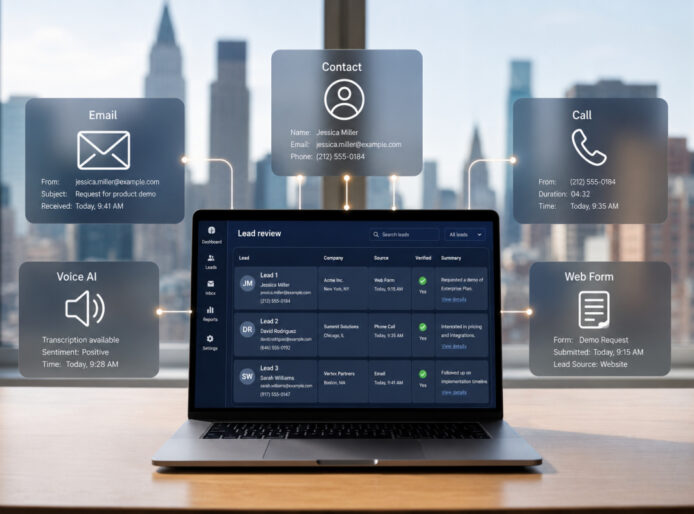
AI Doorman for Sales Teams
We built an AI intake system that filters, enriches, and summarizes leads before they reach CRM, cutting manual lead handling time by about 90%.
AI Outsourcing Services We Offer
AI development outsourcing covers far more than model training, and few projects need all of it. WiserBrand’s AI outsourcing services are organized as the scopes of work below, and you can commission one on its own or combine several depending on where your data and systems already are. Start with a focused proof of concept when a use case still needs testing. If you already have a validated pilot or an existing solution, we can join at the development, integration, or support stage.

AI Strategy and Proof of Concept
Scope the use case, check data readiness, and set success criteria before committing to a build. We run a focused prototype to test the core assumption, then give you a recommendation and the evidence behind it.
Includes:
- Use-case definition and success measures
- Data readiness and feasibility review
- Prototype with a go, adjust, or stop recommendation

Machine Learning and Predictive Analytics
Develop forecasting, recommendation, classification, and anomaly detection against a business target. Work covers model development, feature preparation, and evaluation on representative data. Deep learning is applied only where a simpler method will not meet the requirement.
Includes:
- Model development and tuning
- Evaluation against agreed business metrics
- Deployment-ready model or scoring service

Generative AI Development
Build features that generate content or answers: a knowledge assistant that responds from approved documents, a tool that drafts reports and summaries, or a generative feature inside your product. Generative AI outsourcing here starts with selecting an existing model, adds retrieval from your business data where answers need grounding, and includes evaluation of outputs before release.
Includes:
- Model selection and prompt design
- Retrieval over approved sources
- Output evaluation and review workflow

Conversational AI and NLP
Create customer or employee assistants, intent detection, text classification, and language-data extraction. The focus is how language is handled in a live workflow: understanding a request, routing it to the right path, and passing it to a person when the case needs one.
Includes:
- Support assistant that answers from a knowledge base and hands complex cases to an agent
- Classifier that routes incoming requests to the right queue
- Field extraction from emails and free text

Computer Vision
Analyze images for inspection, object detection, and visual document recognition. We prepare the dataset, train or adapt a model, and test it under the operating conditions it will actually face, so results are measured against realistic inputs rather than clean samples.
Includes:
- Dataset preparation and labeling
- Model training or adaptation
- Testing on representative conditions

Intelligent Automation
Automate document and operational workflows that span several systems. AI classifies requests or extracts information, business rules route the result, and people review the exceptions that need a decision. Agentic approaches are used where they add value, not by default.
Includes:
- Invoice or claim processing from intake to system entry
- Rules that route each case to the right queue
- Exception queue with context for staff review

Data Engineering and Preparation
Collect, clean, transform, and organize the data a model needs, and build a repeatable pipeline that keeps it current for training and production. We prepare and annotate training data where the project requires it.
Includes:
- Repeatable pipeline that supplies training and production data
- Cleaned, joined dataset ready for model development
- Annotation and labeling where the project requires it

Deployment, Integration, and Ongoing Support
Release the solution into production, connect the agreed systems, and monitor it once live. Support covers fixes, model or prompt updates, and handover to your team. We agree the support coverage before launch.
Includes:
- Production deployment
- Agreed system integrations
- Monitoring, updates, and handover
WiserBrand in Numbers
WiserBrand’s engineering, data, and delivery teams support the work behind these figures.
AI Outsourcing Case Studies
A closer look at two AI and data projects, covering the challenge each client faced and how we approached the work.



Tell us what you are trying to solve and we will map out a sensible first step.
AI Outsourcing Solutions by Industry
The same AI and machine learning outsourcing approach looks different in every sector, because the data, the systems, and the review requirements change. Applications vary by industry, data availability, and the workflow you want to improve.
Retail and eCommerce
Retailers hold demand signals, product data, and customer interactions that rarely get used together. We build models and assistants that turn those sources into decisions staff can act on across merchandising, supply, and support.
Use cases: Demand forecasting, product recommendations, catalog enrichment, customer support assistants.
Delivery focus: Catalog and inventory data, commerce-system connections, relevance and business metrics.

Finance and Banking
Financial teams work with sensitive records and processes where traceability matters. We develop extraction, detection, and reporting support that keeps a person in the loop and shows where each answer came from.
Use cases: Anomaly detection, document extraction, reporting support, customer-service assistants.
Delivery focus: Sensitive data handling, source traceability, evaluation, and appropriate expert review.

Manufacturing
Production data and equipment records hold patterns that are hard to spot by hand. We apply models to maintenance, quality, and planning so teams can act earlier and with clearer evidence.
Use cases: Predictive maintenance, visual inspection, production forecasting, technical knowledge assistants.
Delivery focus: Equipment and quality data, operating conditions, safety-related review.

Logistics
Logistics performance depends on data that changes by the hour. We build optimization, prediction, and document processing that fit into dispatch and planning tools without taking control away from staff.
Use cases: Route or capacity optimization, ETA prediction, shipment-document processing, exception triage.
Delivery focus: Operational data freshness, dispatch-system integration, staff control over exceptions.

Real Estate
Property portfolios generate leases, maintenance requests, and tenant questions in volume. We automate the reading and routing of that material so managers spend time on decisions rather than administration.
Use cases: Lease extraction, tenant-inquiry support, maintenance triage, portfolio reporting.
Delivery focus: Property-level access, tenant information, current records, staff review.

Professional Services
Professional firms sell expertise, and their documents carry client confidentiality. We support review, search, and drafting while keeping sources visible and leaving professional judgment with your people.
Use cases: Document review, internal knowledge search, proposal drafting, engagement reporting.
Delivery focus: Client confidentiality, source accuracy, engagement boundaries, professional sign-off.

Key Business Benefits of AI Outsourcing
Bringing in an external team changes how an AI project is staffed, funded, and sequenced. These are the practical gains clients are usually after when they decide to outsource.
Access Specialized AI Skills
AI work draws on data engineering, machine learning, integration, and evaluation skills that rarely sit in one internal team. Outsourcing lets you match the right expertise to the task instead of recruiting every discipline for a single project.
Manage Development Investment
Work can be scoped in stages, so spending follows evidence rather than a full commitment up front. A realistic budget accounts for data preparation, development, hosting, and ongoing maintenance, not just the initial build.
Move From Pilot to Production
A working demo is a starting point, not finished delivery. An external team carries the work through engineering, validation, and integration, so a promising experiment reaches the systems your staff actually use.
Keep Internal Teams Focused
Your people keep business direction and subject expertise while the partner owns the agreed build work. That division of labor lets internal teams stay on their core products instead of absorbing a new technical discipline.
Adjust Delivery Capacity
Project phases need different levels of effort, from a small discovery team to a larger build. Engagement terms let you scale expertise and team size up or down as the work moves through those phases.
Validate Before Scaling
Testing on representative data against agreed acceptance criteria shows whether an approach holds up before it reaches a wider rollout. Finding weak points early is cheaper than discovering them in production.

Why Choose WiserBrand for AI Outsourcing
How a partner works matters as much as what they build. As an AI outsourcing company, WiserBrand keeps one team across AI and software engineering, keeps the engineers who build a solution with it into production, and documents the handover so your people can run it.

AI and Software Engineering in One Team

Continuity From Pilot to Production

Direct Access to the Engineers Building the Solution

Business Outcomes Set the Priorities

Evaluation on Real Project Data

A Documented Transfer to Your Team
Trusted by Leading Brands







Flexible AI Outsourcing Engagement Models
The right way to structure an AI engagement depends on how well-defined the work is and how long you expect it to run.
Dedicated AI Team
A team assigned to your continuing AI work, working alongside your internal stakeholders under agreed roles and delivery responsibilities. We agree who owns requirements, reviews, and approvals, and how priorities are set as the roadmap shifts. The team can cover model development, data preparation, integration, and support as those needs arise.
Project-Based Engagement
A scoped solution or phase with agreed deliverables, milestones, and acceptance criteria. Work is planned against a defined objective, and progress is measured against what was agreed at the start. A fixed price is available when the scope and terms support it. Changes to scope are documented, estimated, and approved before the work continues.
Time and Materials
Work billed against agreed effort and rates, with priorities reviewed as findings emerge. This suits discovery and iterative development where early results shape what comes next, and where committing to a full scope before that learning would be guesswork. You see where effort is going and can redirect it between review points.
Describe your goal and constraints, and we will suggest a sensible starting point.
Our AI Outsourcing Process
AI development outsourcing works best as a sequence with clear checkpoints, so you can see progress and decide whether to continue. This is the path most projects follow, and clients with existing systems can enter at the stage that matches where they are. Timing depends on data readiness, scope, integrations, and evaluation requirements.
Objective, success measures, and data review
Prepared data, solution design, and evaluation plan
Working pilot and a proceed, adjust, or stop decision
Production build tested against acceptance criteria
Integrated release, documentation, and training
Monitoring, prioritized improvements, and a support plan
Discover and Scope
1 WeekWe start with the business objective and the workflow around it, agree what success looks like, and record who owns which decisions. A review of your data and systems shows what is available and what needs work before any build begins.
- Agreed scope and success measures
- Data and system inventory
- Initial delivery plan
Prepare Data and Design
1 WeekWe clean and organize the data the project depends on, confirm access to the sources involved, and choose an approach that fits the use case. Architecture and evaluation are decided here, so the build has a clear target.
- Prepared sample or pipeline
- Solution design
- Evaluation plan
Build and Validate a Pilot
1-2 WeeksWe develop a focused model or application to test the assumption the project rests on. Results are compared against the success measures from scoping, and you get a clear recommendation on whether to continue.
- Working pilot
- Benchmark results
- Proceed, adjust, or stop recommendation
Develop and Evaluate
1 WeekWe build the agreed production scope and test quality, reliability, performance, and the failure cases that matter for your workflow. Findings are measured against the acceptance criteria before anything is released.
- Tested solution
- Evaluation results against acceptance criteria
- Release-readiness findings
Deploy and Integrate
2-3 DaysWe connect the approved systems, release in controlled stages, and train the people who will use and run the solution. Documentation sets out what each side is responsible for after launch.
- Integrated release
- Operating documentation
- Training and handover
Monitor and Improve
OngoingOnce live, we track performance, usage, exceptions, drift where relevant, and operating costs. Issues and improvements are prioritized with your team under the support plan agreed before launch.
- Monitoring setup
- Prioritized improvements
- Agreed support plan
AI Technologies and Tools We Use
Technology is chosen to fit the use case, your environment, and your constraints, not a preferred stack. Each layer below is selected against criteria we agree with you during scoping.
AI and Machine Learning Models
Covers conventional machine learning, deep learning where a task justifies it, and existing generative models. Selection weighs accuracy, interpretability, latency, and operating cost against the use case, so a simpler method is chosen when it meets the requirement.
Data and Retrieval
Handles data pipelines, storage, preparation, and retrieval from approved business information. Choices follow data volume, freshness, access boundaries, and how maintainable the pipeline will be for your team after handover.
Application and Integration Layer
Contains the application logic, business rules, APIs, event-driven connections, and review workflows that put AI into existing software. This layer is where a model becomes part of a process your staff already use.
Evaluation and Operations
Covers testing of models and applications, versioning, deployment, monitoring, and regression checks. It defines how a change is measured after launch, so updates are released on evidence rather than assumption.
Cloud and Hosting
Fits the client’s infrastructure, privacy needs, workload, and budget, whether that means an existing cloud account or another arrangement. Hosting choices and responsibilities are agreed for each project.
Get started with WiserBrand
Let’s begin your project journey
Prompt Response
We’ll contact you within 24 business hours to discuss your project
Exploratory Call
A 15-20 minute call to discuss your needs and goals
Tailored Proposal
Receive a custom proposal with recommended next steps
or
Pick a time that works for you, and let’s hop on a call
Frequently Asked Questions
Answers to the questions we hear most often when clients are weighing up an AI partner.
AI outsourcing services cover AI development and the related work around it: strategy, data preparation, model or application build, integration, evaluation, and ongoing support. The agreed scope determines what is included, so an engagement can be a single pilot or a full production delivery.
Outsourcing fits when you have a defined project or a clear gap in expertise or capacity, and when assembling an internal team would take too long. It also suits organizations that need to move on a specific use case now. You still own the business direction and subject knowledge, and a hybrid approach, with external specialists alongside internal staff, is often the practical answer.
Cost depends on scope, the readiness of your data, the number of system integrations, and how much evaluation the use case requires. Build work is usually separate from recurring costs such as hosting, model usage, monitoring, and support. The most reliable way to price a project is to scope it first, so assumptions are visible before commitments are made.
A focused pilot and a full production implementation are very different in length, so a single number rarely applies. Estimates depend on data readiness, scope, integrations, and the evaluation the use case needs. We give a timeline after the initial scoping work, when those factors are understood well enough to be realistic.
Often, yes, and an early readiness assessment is the way to find out. We review what data exists, how it is stored, and what would need cleaning or collection before a model can be built. Sometimes the work is straightforward; in other cases, data limitations change what is feasible or what should be attempted first.
Access is limited to what the agreed scope requires, under confidentiality terms set out in the contract. How data is processed by any third-party model provider is reviewed as part of solution design, along with hosting requirements. Ownership of code, data, documentation, and third-party components follows the contract.
Integration usually happens through APIs or other approved interfaces, and it depends on what your systems expose and permit. We review the target systems during scoping to confirm what is possible and where access is limited. Real-time connections are not assumed by default; the integration method is chosen to suit the requirement and the system.
Depending on the support plan, we can monitor performance, resolve issues, and update models or prompts after launch. Documentation and handover are provided so your team can operate the system. The level of coverage is set out in the agreed terms.
Look for evidence of comparable work, real technical and integration ability, and a clear method for evaluating results. Check that scope, communication, security, and ownership terms are stated openly before you commit. Ask how the provider handles data, failure cases, and support after launch. These questions reveal more than a capability list or a polished proposal.