Summary

Business Challenge
- The site had scale, but also internal linking complexity
With around 200K pages, the website had the kind of structure that can easily dilute ranking signals. Important category and virtual category pages were competing for authority inside a large internal ecosystem, which made it harder for the most valuable pages to stand out.
- High-value category keywords were underperforming
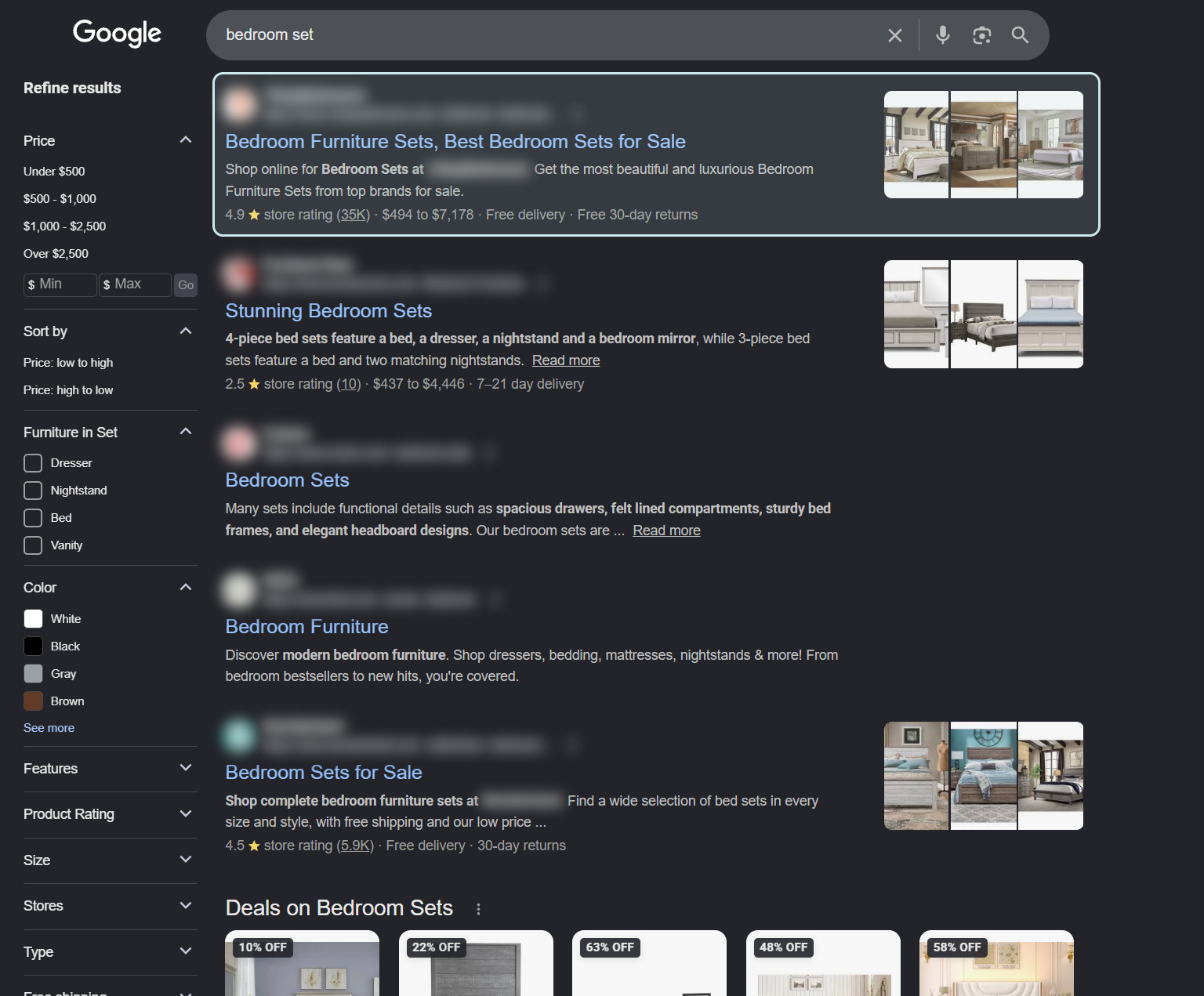
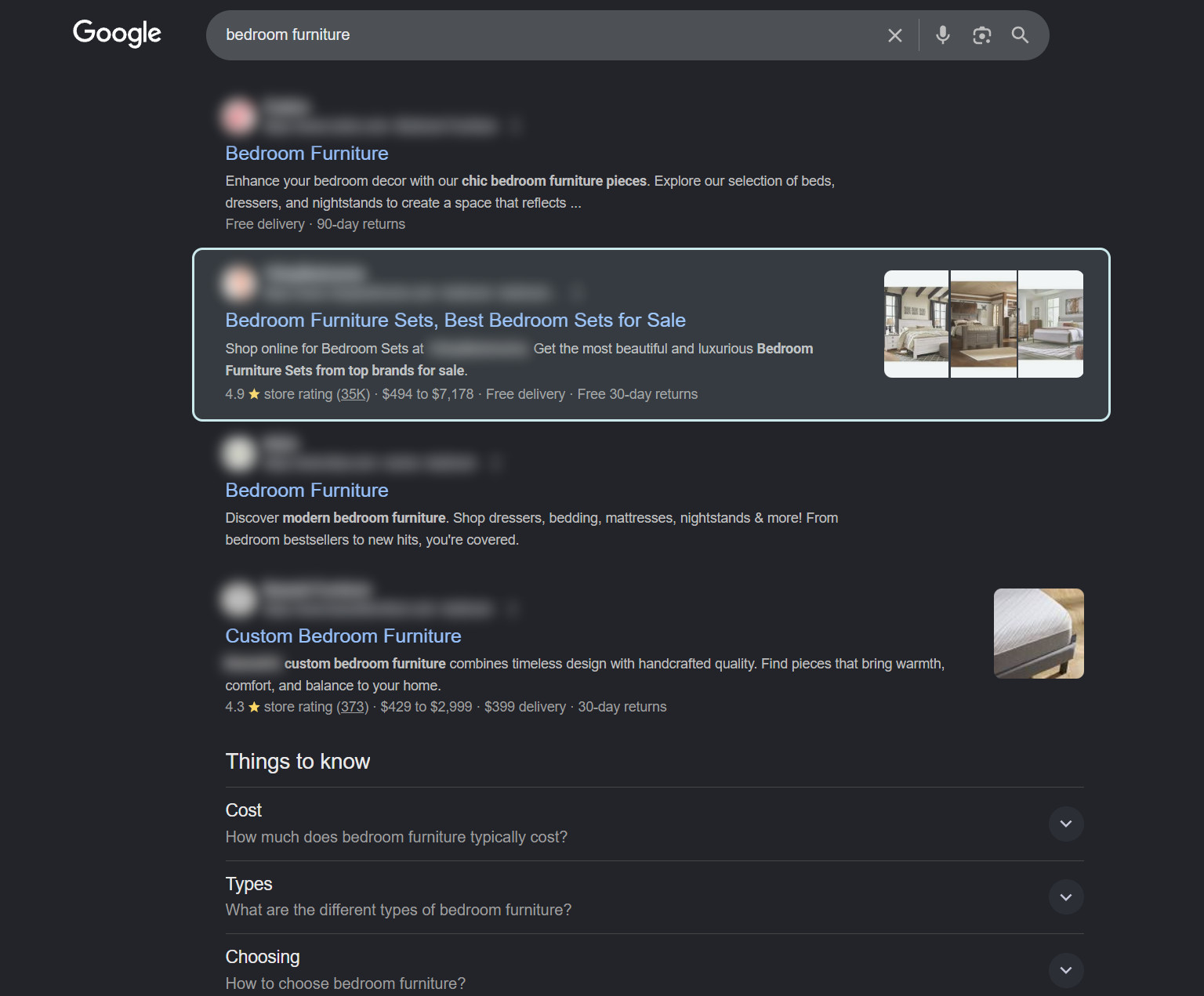
The store was not where it needed to be for major non-brand commercial terms like “bedroom set” and “bedroom furniture.” Those queries carry strong purchase intent and large search volume, so improving them had clear revenue potential.
- The business needed growth without depending on link-building
There was no active link-building during this phase. That meant the SEO strategy had to produce results through site structure, testing, and page-level improvements rather than off-page support.
What We Did
We focused on structural SEO updates that could improve rankings for priority category pages across a very large site. The work centered on better internal authority flow, cleaner link architecture, and controlled testing before full deployment.
1
Audited internal linking across key page types
We reviewed how authority moved between product pages, root categories, and virtual categories. On a site of this size, even small template-level linking decisions can affect how category pages perform in search.
2
Removed repetitive category links from product pages
Some product page links were effectively repeating breadcrumb pathways and sending more internal links back to category pages than necessary. We reduced that excess linking to simplify signals and decrease internal noise.
3
Strengthened links to priority virtual categories
We used the site’s internal linking controls to give high-value virtual categories stronger support from root categories and other pages closer to the root. This helped push more authority toward the pages tied to the most profitable product groups.
4
Prioritized commercially important keyword groups
We focused especially on brand-specific virtual category pages linked to top-selling product lines. This made the SEO work more aligned with revenue, not just rankings.
5
Used A/B-style SEO testing before broader rollouts
Before implementing changes across larger page groups, we tested updates to meta tags, SEO text, and page elements on selected sets of pages and compared them against control groups. Changes that showed positive impact were then scaled more broadly.
6
Continued product content quality reviews
While not the main focus of this phase, we also kept reviewing and improving product descriptions when manufacturer copy was weak. That supported product-level visibility and helped maintain overall site quality.