Summary
Business Challenge
- Manual image handling could not keep pace
At catalog scale, every image had to be understood before it could be displayed correctly. With multiple images per product and new photography arriving continuously, manual tagging was not viable.
- Different image types require different treatment
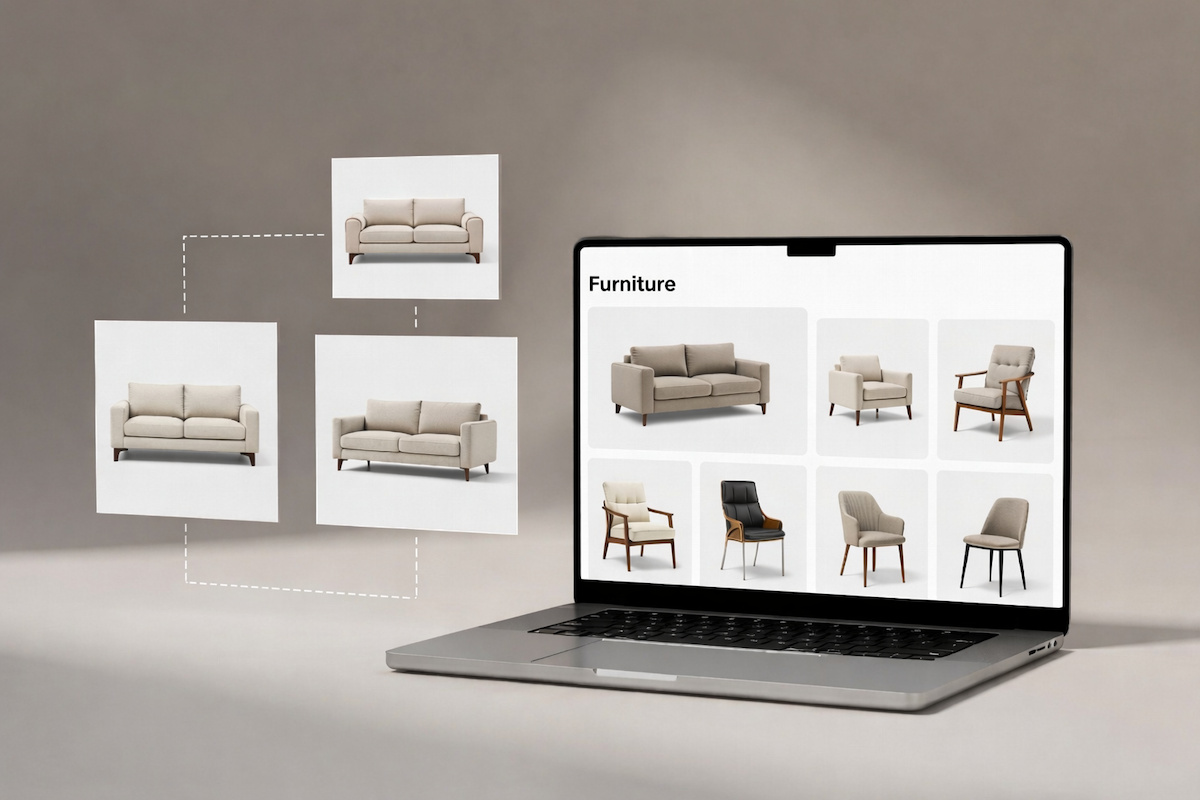
A silhouette image, a gallery shot, a material swatch, and a dimensional diagram each play a different role in merchandising. The system had to understand what each image showed before it could crop, scale, or place it properly.
- Layout consistency mattered across categories
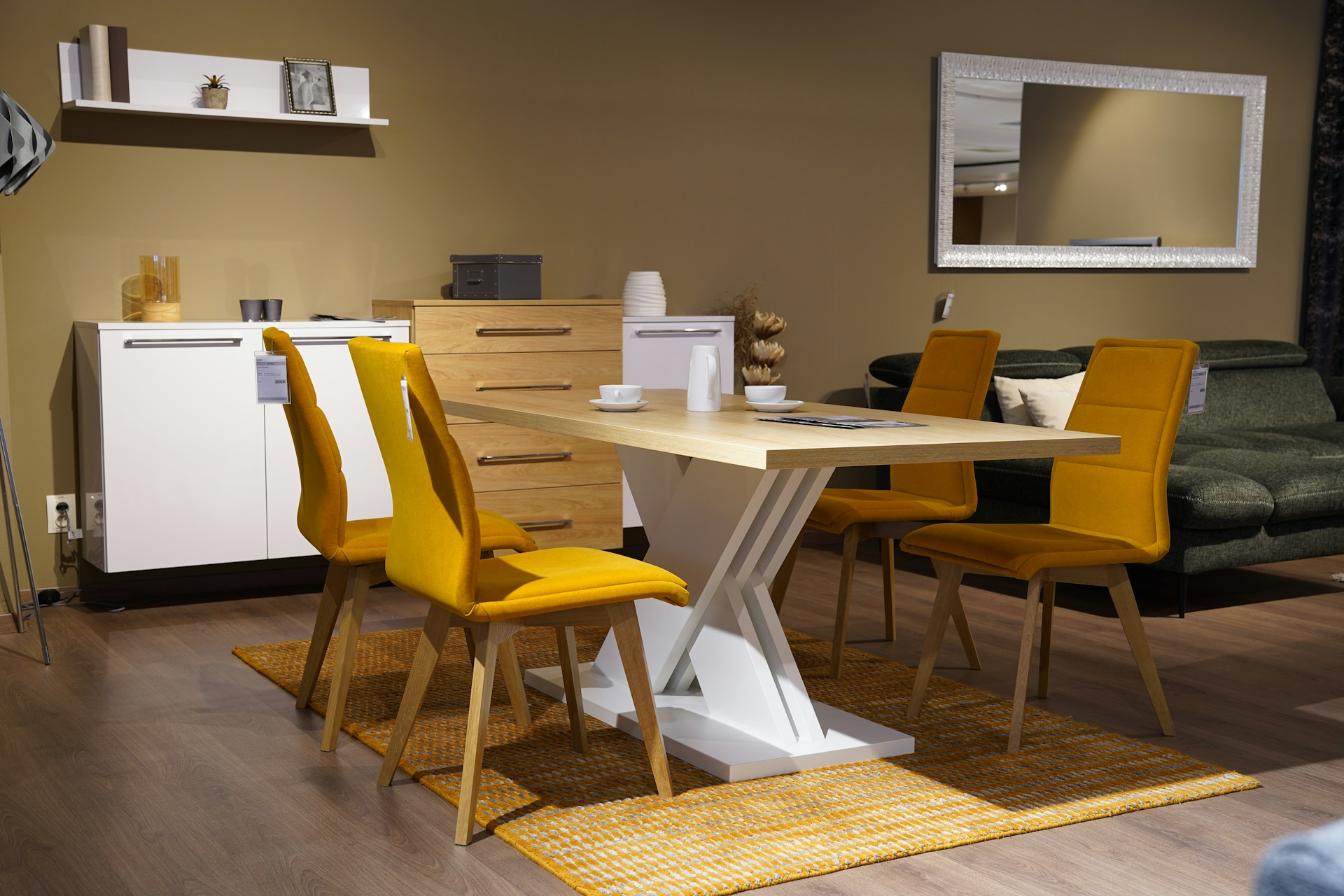
Furniture does not photograph the same way across categories. A nightstand often works best front-on, while a sofa usually performs better from the side. Without intelligent image selection, category pages quickly become uneven and visually noisy.
- Supplier imagery was inconsistent and often sub-spec
Source photography arrived with a mix of problems: low resolution below marketplace requirements, white side borders, and noisy backgrounds that broke standard cropping tools. Traditional upscaling only made weak images look worse.
What We Did
We built a production-ready image pipeline that combined custom neural networks with catalog-specific logic, all tuned to the realities of furniture merchandising. Rather than forcing a generic model onto a specialized visual workflow, we designed each layer to solve a specific task well.
1
Silhouette vs. gallery classification
The first model determined whether an image showed a product on a neutral background or in a room setting. That decision shaped the rest of the processing flow.
2
Image-type and viewing-angle recognition
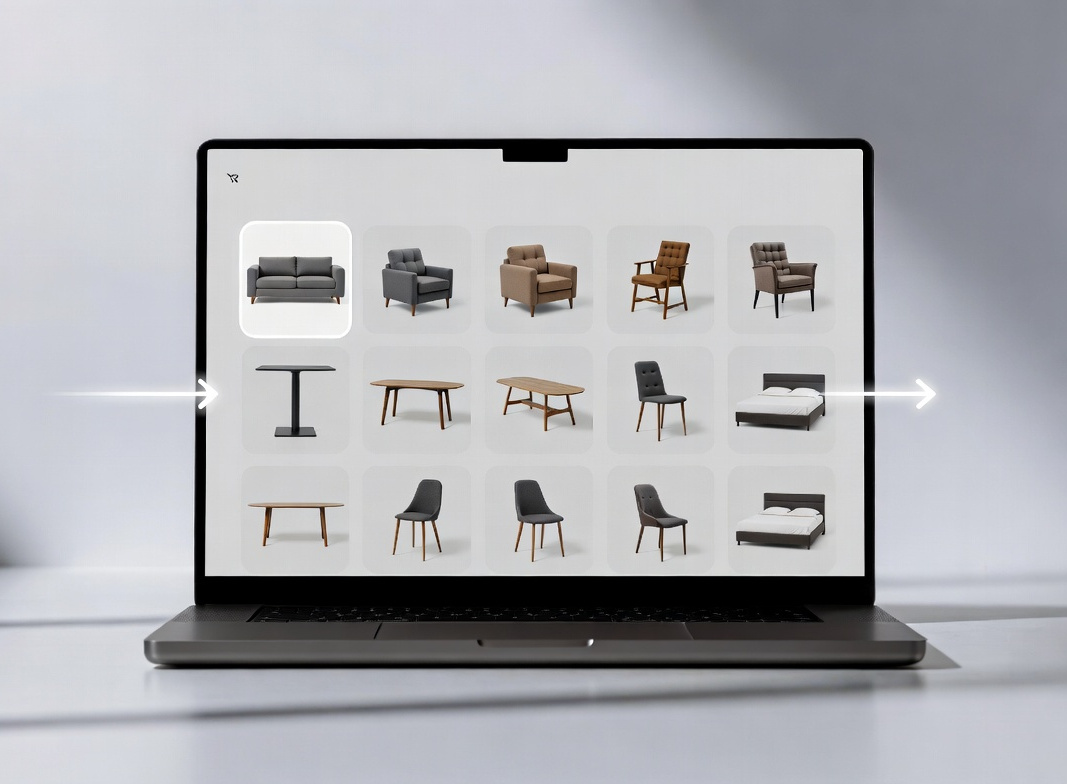
A second model identified 16+ image classes, including front, side, and top views, detail shots, material swatches, and dimensional diagrams.
3
Category-aware image selection
Using the classification output, the system selected the most effective image for each product type, helping category pages feel more balanced and easier to browse.
4
Crop and scale logic tuned to image type
Gallery images could be cropped to fill the card area. Silhouette images were carefully scaled to preserve the product. The pipeline also handles edge cases like white borders and noisy backgrounds that break generic cropping tools, using ML-assisted region detection to separate the product from empty space.
5
Super-resolution for low-quality supplier images
When source images fell below the minimum resolution required for Google Shopping, they were routed through a custom super-resolution network trained specifically on furniture imagery, avoiding the softness of traditional upscaling.