AI Transformation Services
Reinvent How Your Business Works With AI
We provide AI transformation services for organizations ready to move beyond disconnected tools and isolated pilots. WiserBrand helps leadership identify where AI can change business performance, redesign priority workflows and operating models, and build the data, technology, governance, and delivery capabilities required to scale.
Our consultants and engineers work as one team from transformation strategy through implementation. We can start with one function or value stream, prove the operating and financial case, and expand successful patterns across the enterprise without separating the roadmap from the systems needed to deliver it.

4.9/5 client rating

Recognized growth company

Experience with GPT models

Experience with Claude models

AI Back-Office Automation for a Trucking Company
We helped a U.S. trucking company cut routine document processing from 20 minutes to under 30 seconds by turning broker paperwork and load data into one AI-powered workflow.

AI Diligence and Loan Monitoring for a PE Fund
We built an AI-assisted monitoring workflow that helps a mid-market PE fund review data-room documents, flag borrower payment issues, and turn manual reconciliation into structured exception review.

AI Coordinators Automate Maintenance Billing Prep
AI coordinators helped a property management company prepare maintenance work for billing faster, while keeping every invoice under finance review.
What Enterprise AI Transformation Changes
Enterprise AI transformation is a coordinated change to how an organization creates value, makes decisions, serves customers, and runs operations. It is broader than buying an AI platform or deploying one application. The work connects business priorities with redesigned processes, accountable people, trusted data, integrated technology, and evidence that the change is worth sustaining.
The objective is not to automate every activity. We identify where AI can materially improve a business outcome, determine where deterministic automation or process improvement is more appropriate, and preserve human responsibility for decisions that require judgment, authority, or professional accountability.

Strategy and Value Portfolio
AI investments are tied to defined growth, efficiency, customer, resilience, or risk outcomes and managed as a portfolio rather than a collection of unrelated requests.

Processes and Decisions
Priority workflows are redesigned around the strengths and limits of people, AI models, business rules, and connected systems instead of adding AI to an inefficient process unchanged.

Data and Technology Foundations
Data access, quality, architecture, integrations, identity, evaluation, and operational controls are developed to support reusable capabilities rather than one-off demonstrations.

Operating Model and Governance
Decision rights, ownership, funding, delivery practices, controls, and review forums are defined so initiatives can move at an appropriate speed without unclear accountability.

Roles and Ways of Working
Affected roles, handoffs, review responsibilities, skills, and support needs are redesigned alongside the technology. Detailed rollout and day-to-day enablement can continue through AI adoption.

Value Realization
Baselines, leading indicators, operational measures, costs, and stage gates show whether an initiative should be expanded, improved, paused, or retired.
Our AI Transformation Services
Our AI transformation consulting services connect executive direction with practical delivery. An engagement may focus on a single value stream or coordinate several business functions, platforms, and implementation teams. Scope is based on the organization’s priorities, maturity, risk environment, internal capacity, and evidence already available.

AI Transformation Strategy
We turn business priorities into an AI transformation strategy that leadership can fund, govern, and execute. The work defines the target outcomes and compares opportunities across functions so investment decisions are based on value, feasibility, risk, and organizational fit rather than novelty.
The resulting portfolio balances near-term improvements, enabling foundations, and longer-term reinvention. Each shortlisted initiative has an owner, baseline, evidence requirement, dependencies, and a decision path.
Includes:
- Executive alignment and transformation principles
- Current initiative and investment review
- Opportunity discovery across functions
- Business cases and value hypotheses
- Portfolio prioritization and sequencing
- Transformation roadmap and decision gates

Business Process & Workflow Reinvention
We examine how work moves across teams, systems, documents, decisions, and exceptions, then design a future-state workflow that assigns each step to the right combination of people, AI, and deterministic automation.
The design covers normal work as well as missing data, conflicting inputs, uncertain outputs, integration failures, approval thresholds, and customer or operational exceptions. This keeps the transformation grounded in how the business actually operates.
Includes:
- Current-state process and value-stream mapping
- Bottleneck, rework, and exception analysis
- Human-AI workflow and responsibility design
- Decision, approval, and escalation rules
- Future-state process measures
- Lighthouse workflow scope

AI Operating Model & Governance
We define how AI decisions are made from initiative intake through design, validation, release, monitoring, change, and retirement. Governance is proportionate to the data, users, actions, and potential impact of each capability.
The operating model clarifies business and technical ownership, funding, delivery roles, shared standards, and involvement from security, privacy, legal, risk, and compliance teams. It can support a centralized AI function, federated delivery, or a hybrid structure.
Includes:
- Target AI operating model
- Roles, ownership, and decision rights
- Use-case intake and risk classification
- Architecture and release governance
- Responsible-use and human-oversight requirements
- Portfolio and steering cadence

Data, Platform & Integration Foundations
We shape the reusable technical foundations needed for the transformation portfolio. This includes the data sources, context, architecture, model access, business-system connections, identity controls, evaluation capabilities, deployment environments, and monitoring required to move from pilots to dependable services.
We compare configuration, integration, build, and vendor options against capability, cost, portability, security, and long-term ownership requirements. Existing investments remain part of the assessment.
Includes:
- Data quality, access, and ownership planning
- Target architecture and reusable patterns
- Model, platform, and vendor selection criteria
- Integration and identity architecture
- Evaluation and observability foundations
- Scalability, resilience, and cost planning

AI Solution & Product Engineering
WiserBrand designs and builds the applications, workflows, data pipelines, models, agents, interfaces, and integrations required to put the target state into operation. Delivery can cover an internal capability, a customer-facing experience, or a new AI-enabled product.
Each implementation defines what the system can access, what it may do, how its output is evaluated, where human review is required, and how the client team will operate or extend it after launch.
Includes:
- Proof-of-value and lighthouse development
- AI application and workflow engineering
- Predictive, generative, and agentic components
- API and business-system integration
- Evaluation, QA, security, and deployment
- Documentation and operational handover

Workforce & Change Design
We identify how transformed workflows affect roles, responsibilities, decisions, skills, incentives, and capacity. Managers and employees closest to the work participate in design and validation so the future state reflects operational reality and preserves the judgment the organization needs.
This service defines the workforce change required by the transformation. Role-based training, communications, support, and sustained usage programs can be delivered as part of the implementation or through a dedicated AI adoption engagement.
Includes:
- Stakeholder and role-impact analysis
- Future responsibilities and handoffs
- Human-oversight and accountability design
- Capability and skills requirements
- Change, communication, and enablement roadmap
- Adoption measures and feedback model

Continuous Evolution
We establish how transformation value will be measured and reviewed from the first lighthouse initiative through scaled operations. The measurement model connects technical and usage signals with operational and financial outcomes.
After release, findings from performance, cost, risk, users, and business results feed back into the portfolio. Initiatives can be optimized, expanded to new workflows, consolidated into shared platforms, or retired when evidence no longer supports them.
Includes:
- Baseline and KPI framework
- Benefit, cost, and risk tracking
- Stage-gate and investment reviews
- Production performance monitoring
- Optimization and scaling backlog
- Portfolio reporting and retirement criteria
WiserBrand in Numbers
Our AI transformation work draws on WiserBrand’s broader business consulting, software engineering, data, cloud, quality assurance, and program-delivery capabilities.
AI Transformation Case Studies
These projects show how strategy, process redesign, data foundations, engineering, controls, and operational change can work together. Published results are specific to each client’s starting point and scope rather than forecasts for another organization.


Bring your strategic priorities, existing initiatives, target functions, and known constraints.
AI Transformation by Industry
The transformation discipline is consistent across sectors, but value streams, data, systems, regulations, and acceptable levels of automation vary. We adapt the portfolio, target operating model, architecture, controls, and delivery sequence to the industry context.
Retail
AI retail transformation can connect merchandising, inventory, customer service, marketing, fulfillment, and commerce decisions around shared product, customer, order, and interaction data.
- Redesign product discovery, recommendations, and customer-support journeys.
- Improve demand, inventory, assortment, pricing, and fulfillment decisions.
- Coordinate AI across commerce, CRM, ERP, PIM, support, and analytics platforms.
- Establish controls for customer data, promotional decisions, brand content, and peak-season operations.

Construction
AI transformation for construction focuses on connected work across estimating, procurement, project administration, field operations, maintenance, compliance, payroll, and finance. The goal is to reduce repeated preparation and fragmented handoffs while keeping project and commercial decisions with accountable teams.
- Structure and compare bids, supplier quotes, submittals, and project documents.
- Connect office and field workflows across email, project, CRM, ERP, and accounting systems.
- Surface schedule, purchasing, documentation, and cost exceptions earlier.
- Preserve approval authority for contracts, safety, payment, scope, and project decisions.

Finance
AI transformation in financial firms can reshape document-heavy operations, reconciliation, service, monitoring, compliance preparation, and decision support. Controls must reflect the firm’s products, jurisdictions, professional duties, and risk model.
- Organize contracts, diligence files, borrower records, and transaction evidence.
- Prepare reconciliation, exception, compliance, and management-review workflows.
- Connect approved data across core platforms, accounting systems, document stores, and analytics.
- Keep credit, investment, accounting, legal, tax, and regulatory conclusions with qualified owners.

Manufacturing
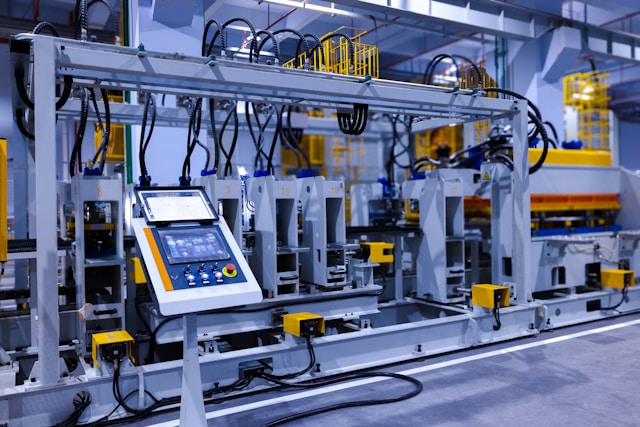
Manufacturers can transform planning and coordination across sales, quoting, procurement, production, quality, inventory, maintenance, and service. AI is most useful when it connects operational context and highlights the next decision rather than creating another isolated dashboard.
- Improve forecasting, material planning, quote preparation, and exception handling.
- Connect ERP, production, inventory, quality, service, and document data.
- Apply predictive methods to maintenance, quality, demand, and capacity questions.
- Define safe fallback and human review for production-impacting actions.
Logistics & Supply Chain
Logistics organizations can use AI for business transformation across demand and capacity planning, document processing, shipment coordination, warehouse operations, customer updates, billing, and exception response.
- Turn messages and documents into structured work in transportation and warehouse systems.
- Compare rates, orders, shipments, proofs of delivery, invoices, and service records.
- Improve planning and early visibility into operational exceptions.
- Maintain escalation paths when partner data is late, incomplete, or conflicting.

Professional Services
Professional-services firms can reshape research, intake, knowledge, document review, project administration, and billing preparation while preserving engagement boundaries and expert responsibility.
- Create permission-aware knowledge and research workflows with source references.
- Structure client intake, document preparation, and administrative handoffs.
- Connect project, matter, document, time, billing, CRM, and communication systems.
- Keep client-facing advice and professional conclusions under qualified review.

AI Transformation Levers
We select technology after defining the business change, required evidence, users, data, and operating responsibilities. One transformation may combine several of these capabilities with conventional software and deterministic automation.

Generative AI Transformation
Generative AI transformation redesigns content- and knowledge-intensive work using models that can summarize, draft, transform, and analyze language, images, code, and other information. Grounding, evaluation, review, and data boundaries are defined for each use case.
Agentic AI & Multi-Step Workflows
Agentic systems can retrieve context, plan bounded steps, use approved tools, and coordinate work across applications. Our agentic AI consultants design permissions, recovery behavior, approval gates, and operational ownership alongside the workflow.

AI Automation Transformation
AI automation transformation combines model-based interpretation with rules, APIs, document processing, and established workflow automation. Variable inputs can be interpreted by AI while predictable steps and controls remain deterministic.
Predictive AI & Decision Intelligence
Predictive models support forecasting, classification, recommendations, anomaly detection, and risk estimation. The transformation work connects predictions to a specific decision, responsible user, feedback loop, and measurable outcome.

AI-Enabled Customer Experience
AI can change how customers search, buy, receive service, and complete requests across digital and assisted channels. Transformation connects the experience with relevant business systems, policies, fulfillment capabilities, and human escalation.

AI Products & New Revenue
Organizations can introduce AI-enabled features, services, and products or use AI to serve previously uneconomic needs. We help validate the customer and commercial case, build the product, and establish the technology and operating model required to scale it.

Why WiserBrand
WiserBrand combines AI transformation advisory with the engineering and operational capabilities needed to implement the target state. Business, operations, data, security, and technology stakeholders remain involved in the decisions that affect value, access, controls, ownership, and release.

Consulting and Engineering in One Team
Workflow-First Transformation

Provider-Neutral Architecture

Evidence-Based Investment Gates

Production and Integration Depth

Governed Handover and Evolution
AI Transformation Engagement Models
The right engagement model depends on how clearly the target state is defined, whether useful evidence already exists, how many functions are involved, and which capabilities the organization can provide internally.
Transformation Diagnostic & Blueprint
Establish the value ambition, assess the current state, identify transformation opportunities, and define the portfolio, target operating model, foundations, governance, and roadmap required to move forward.
Function or Value-Stream Reinvention
Redesign one connected area of the business, such as customer service, procurement, finance operations, merchandising, or contract work. The engagement combines process redesign, architecture, lighthouse delivery, user validation, and a scale recommendation.
Enterprise AI Transformation Program
Coordinate a portfolio across functions through shared governance, data and technology foundations, solution delivery, operating-model change, workforce planning, rollout, and value realization. Priorities evolve through an agreed steering cadence as evidence and business needs change.
We can review your current initiatives, target outcomes, internal ownership, delivery capacity, and constraints.
Trusted by Leading Brands








Our AI Transformation Process
Our process connects enterprise decisions with delivery evidence. Timing is established after the initial assessment because it depends on portfolio breadth, current maturity, data and system access, decision speed, risk requirements, and internal capacity.
Business measures and constraints
Initiatives, technology, governance, and workforce
Workflows, operating model, architecture, and roadmap
Solution delivery and real-world validation
Reusable foundations, rollout, ownership, and enablement
Portfolio review, optimization, expansion, and retirement
Align Outcomes & Baseline
1 WeekWe clarify why the organization is considering transformation and what leadership expects it to change. The work establishes sponsors, decision owners, affected functions, investment constraints, existing commitments, and the measures that will be used to assess progress.
- Transformation mandate
- Outcome hierarchy
- Current baselines
- Stakeholders
- Decision structure
Diagnose the Enterprise
1–2 WeeksWe examine priority value streams, current AI initiatives, data, architecture, integrations, governance, delivery practices, roles, and change capacity. The diagnostic identifies constraints and duplication as well as assets that can be reused.
- Current-state assessment
- Opportunity map
- Dependency inventory
- Prioritized gaps
Design the Target State & Portfolio
1 WeekWe design future workflows and capabilities, compare opportunities, build business cases, and sequence initiatives with their enabling foundations. The blueprint also defines the target operating model, architecture principles, controls, funding decisions, and evidence gates.
- Target state
- Prioritized portfolio
- Business cases
- Architecture direction
- Governance model
- Phased roadmap
Deliver Lighthouse Initiatives
1–3 WeeksWe implement a small number of high-value initiatives using representative data, intended users, relevant integrations, and defined controls. Validation covers business impact, technical quality, workflow fit, usability, risk, operating cost, and production readiness.
- Working capability
- Evaluation results
- Operating findings
- Evidence-based refine, scale, pause, or stop decision
Scale Workflows, Platforms & Adoption
1 WeekApproved initiatives move through controlled production rollout. We establish reusable integration, evaluation, security, deployment, and monitoring patterns; coordinate workflow and role changes; and prepare business and technical owners to operate the new capability.
- Production workflows
- Reusable foundations
- Trained owners and users
- Operating procedures
- Rollout measures
Govern Value & Evolve
OngoingWe review performance, usage, risk, cost, user feedback, and business outcomes against the approved cases. Findings drive optimization, expansion, consolidation, additional investment, or retirement decisions across the portfolio.
- Value reporting
- Prioritized improvement backlog
- Portfolio decisions
- Ongoing governance cadence
Technology Foundations for Enterprise AI Transformation
Architecture decisions depend on business requirements, the existing environment, data sensitivity, performance, scale, cost, portability, governance, and long-term ownership. The target architecture is documented as part of the transformation blueprint.
Experience & Application Layer
AI can appear inside existing business applications or through custom web, mobile, conversational, and workflow interfaces. The interaction is designed around the user’s task and the actions they are authorized to take.
Models & Orchestration
Model selection considers task quality, context, modality, latency, cost, privacy, hosting, and support requirements. Orchestration manages instructions, routing, tools, workflow state, retries, approvals, and escalation across one or several models.
- OpenAI
- Anthropic
- Google Gemini
- Open-source or self-hosted models
Enterprise Knowledge & Data
AI capabilities can use structured business records, approved documents, search indexes, vector retrieval, analytical datasets, and real-time events. Access follows source permissions, and outputs can retain references to the records used.
Integrations & Event Flows
Applications connect through available APIs, webhooks, events, queues, database interfaces, secure file exchange, or MCP servers. Each connection defines authentication, rate limits, error handling, logging, and permitted read or write actions.
Security, Governance & Human Control
Identity, role-based access, data boundaries, secrets, retention, approval steps, audit records, escalation, and fallback behavior are designed according to the use case. Higher-impact or uncertain actions can remain under explicit human approval.
Evaluation, MLOps & Cost Management
Evaluation covers model output, complete workflow performance, permissions, failures, latency, and operating cost. Changes to models, prompts, retrieval, data, tools, or access rules go through appropriate regression checks and release controls.
AI Transformation Across Your Existing Systems
We assess the tools and licenses already in place before recommending another platform. Final integration scope depends on available interfaces, client permissions, rate limits, test environments, data-handling requirements, and the actions the transformed workflow must support.

CRM, Sales & Service
- Salesforce
- HubSpot
- Zendesk
- Zoho CRM
- Pipedrive
eCommerce
- Adobe Commerce (Magento)
- Shopify
- WooCommerce
- Shopware
- Marketplace workflows
Workplace & Productivity
- Microsoft 365
- Google Workspace
- Microsoft Teams
- Slack
- Calendars
- Spreadsheets
Data, Cloud & Custom Connectivity
- Data warehouses
- BI platforms
- AWS
- Microsoft Azure
- Google Cloud
- REST API
- GraphQL API
- MCP Servers
ERP, Operations & Finance
- Odoo
- Oracle NetSuite
- QuickBooks
- Xero
- Yardi
- Internal business applications
Get started with WiserBrand
Let’s begin your project journey
Prompt Response
We’ll contact you within 24 business hours to discuss your project
Exploratory Call
A 15-20 minute call to discuss your needs and goals
Tailored Proposal
Receive a custom proposal with recommended next steps
or
Pick a time that works for you, and let’s hop on a call
Frequently Asked Questions
Answers to common questions about enterprise AI transformation, consulting scope, priorities, foundations, value, cost, and timing.
AI transformation services help an organization redesign how it creates value and operates with artificial intelligence. The work can include executive alignment, opportunity and business-case development, process redesign, target operating model and governance, data and platform foundations, solution engineering, workforce change, rollout, and value measurement.
The exact scope depends on the starting point. One organization may need to transform a single value stream, while another may need an enterprise program coordinating several functions and shared capabilities.
AI transformation changes the business system around AI: value streams, processes, decisions, products, operating model, data and technology foundations, workforce design, and investment portfolio. It is appropriate when AI is expected to reshape how a function or organization works.
AI adoption services focus on introducing selected capabilities into day-to-day work. They address rollout, role-specific enablement, workflow fit, usage, support, governance, and sustained uptake. Adoption can be one workstream within a broader transformation.
Begin with a business outcome, an accountable sponsor, and evidence about the current state. Review existing AI initiatives, priority value streams, operational baselines, data and technology conditions, governance, workforce implications, and delivery capacity before committing to a large platform or portfolio.
The first implementation should be large enough to test a meaningful business case but bounded enough to evaluate safely. Findings should inform the architecture, governance, roadmap, and later investment decisions.
We compare opportunities across business value, strategic alignment, feasibility, data availability, integration effort, operating cost, risk, workforce impact, and the organization’s ability to own the result. Shortlisted opportunities receive a baseline, expected benefit, dependencies, and evidence requirements.
The portfolio should balance visible early results with foundational work and longer-term reinvention. A low-value idea is not advanced simply because it is technically easy, and an attractive idea may be sequenced later if critical data, process, or ownership dependencies are not ready.
No. Enterprise-wide modernization is not automatically required before useful AI work can begin. We identify the minimum trustworthy data, access, integrations, controls, and operating ownership required for the first initiatives, while placing broader foundational improvements in the roadmap where they support several use cases.
Some legacy systems can remain systems of record and connect through approved interfaces. Other constraints may require a data-quality, integration, identity, or modernization workstream before a particular capability can scale.
Value measurement begins with the current baseline and the business decision the initiative is expected to improve. Measures may include capacity, cycle time, cost, revenue, conversion, retention, error or rework, service levels, working capital, risk exposure, or time returned to employees.
Those outcomes are reviewed alongside technical quality, usage, exceptions, latency, reliability, and operating cost. Stage gates define the evidence required to expand, improve, pause, or retire an initiative instead of treating deployment as proof of value.
Cost and timing depend on the number of functions and workflows involved, the quality and accessibility of data, system integrations, platform decisions, governance and security requirements, workforce impact, implementation scope, and the client’s internal decision and delivery capacity.
A transformation diagnostic or one value-stream engagement requires less investment than a multi-function enterprise program. WiserBrand defines milestones, roles, assumptions, third-party costs, and decision gates after reviewing the current environment and intended outcome; we do not apply a generic enterprise schedule before that work.