ChatGPT Instant Checkout: How Shopping in ChatGPT Works

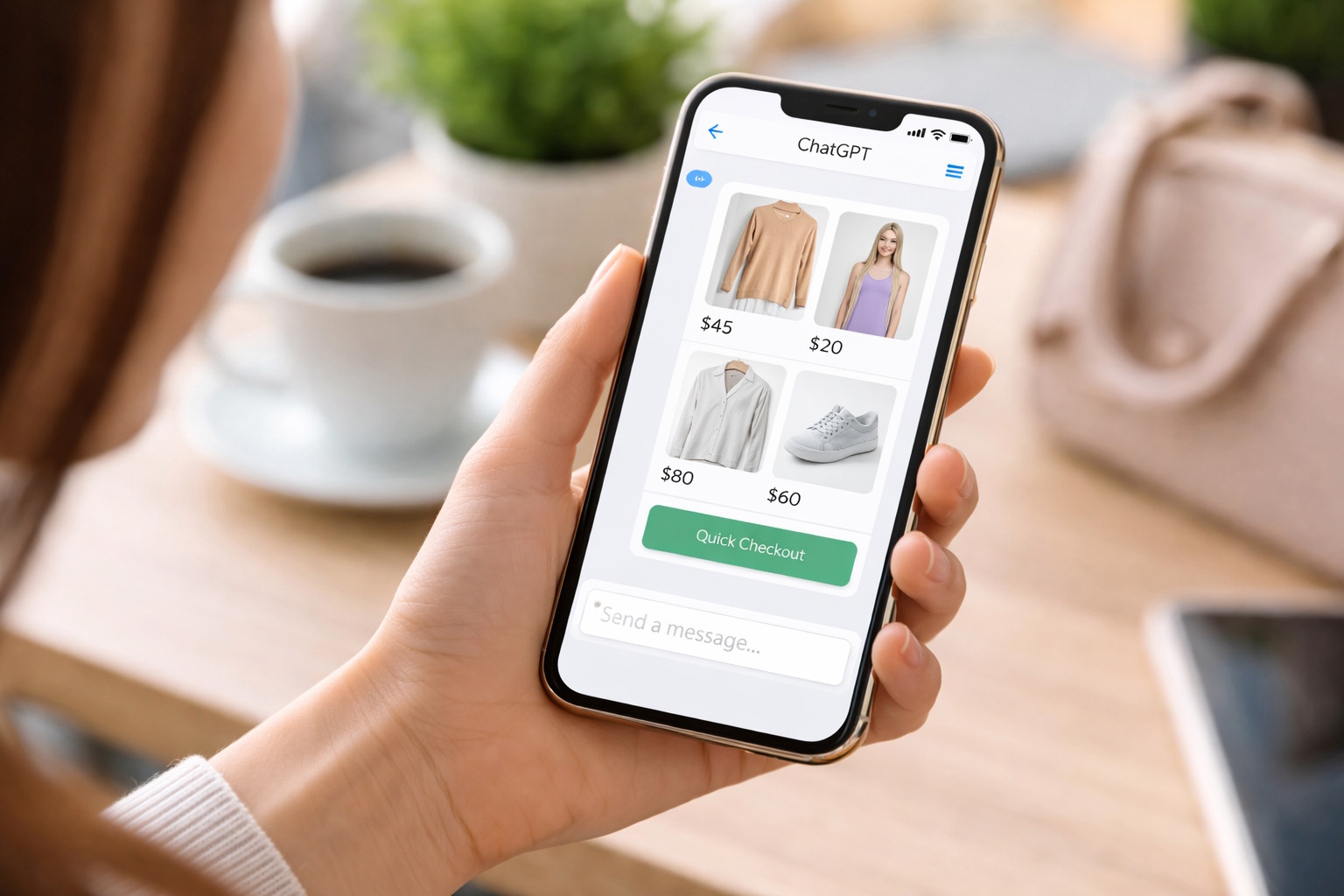
ChatGPT shopping has moved from product discovery to actual checkout in one conversation. A user can ask for options, compare products, open a product detail view, and on eligible listings complete instant checkout in chat. If instant checkout is not available for that item, ChatGPT sends the user to the merchant site to finish the purchase.
As of the latest OpenAI Help Center update, instant checkout is available for logged-in Free, Plus, and Pro users in the U.S., with eligible items from Etsy and select Shopify merchants. OpenAI’s docs also describe support for major CMS like WordPress or Magento and payment methods like cards, Apple Pay, Google Pay, and Link.
For merchants, this is a new sales channel, not a replacement for core commerce operations. In OpenAI’s commerce flow, checkout UI appears in ChatGPT, but merchants still validate orders, run payment and risk checks on their own stack, accept or decline the order, and handle shipping, returns, and support. That split matters for architecture, compliance, and ownership of the customer experience after purchase.
What Shopping in ChatGPT Means
ChatGPT shopping is a layered flow inside one conversation. A user starts with a shopping prompt, gets product suggestions, opens a product detail view, and then either checks out in chat or continues on the merchant’s site. That structure is what makes it useful for fast comparison and purchase decisions without jumping between many tabs.
Layer one is shopping results. When ChatGPT detects shopping intent, it can show product options with images, pricing context, and links to learn more or purchase. OpenAI states these product results are selected independently by ChatGPT, are not ads, and are not driven by OpenAI partnerships. Ads, when shown, are separate and clearly labeled.
Layer two is product detail and merchant options. After a user opens a listing, ChatGPT can show details like labels, review summaries, and pricing from third-party providers. For the same product, users may see multiple merchant options with different prices.
Layer three is instant checkout. On eligible listings, a Buy button appears in the product detail view or sidebar. The user can complete checkout inside ChatGPT using supported payment methods. After a successful order, the buyer gets merchant email confirmation and can view completed orders in ChatGPT settings under Orders.
The redirect rule is straightforward. If a listing does not support instant checkout, ChatGPT links out to the merchant website to finish the purchase. Some purchase types also push activity to the merchant side by design. For example, custom personalization fields are not collected in ChatGPT checkout today, so the seller follows up by email, or the buyer can complete that order directly on the merchant site.
How Merchants Can Sell Through ChatGPT
Merchants can win sales in ChatGPT through two routes:
- Discovery: your products appear in ChatGPT shopping results and users click through to buy on your store.
- Direct in-chat purchase: eligible listings offer instant checkout so users can buy products in ChatGPT without leaving the conversation.
Start with the discovery route because it has the lowest integration load. OpenAI says merchant options for a product are built from product and merchant metadata provided by third-party sources or directly by merchants. That means your catalog quality, price accuracy, stock status, and seller identity all affect visibility.
If you want stronger control over how your catalog appears, submit a direct product feed. OpenAI’s Product Feed Spec describes a structured feed (with required and optional fields) that is ingested, validated, and indexed for retrieval and ranking. The spec also calls out keeping feed data fresh when price or availability changes.
For teams building ChatGPT for eCommerce as a direct sales channel, the modern path is Instant Checkout integration through the Agentic Commerce Protocol. OpenAI documents that ACP is open to build against, while Instant Checkout inside ChatGPT is currently available to approved partners via application.
Implementation is straightforward at a high level. You expose checkout session endpoints, and ChatGPT calls them to create and update session state as the buyer changes shipping, discounts, or cart items. Your responses return authoritative cart totals and options used in the ChatGPT checkout UI.
Payments stay on your commerce stack. OpenAI’s commerce docs state that delegated payment data is passed to the merchant or PSP, then processed through existing merchant payment rails. OpenAI is explicit that it is not the merchant of record, so order acceptance, fraud/risk checks, tax calculation, charging, fulfillment, returns, and support remain merchant responsibilities.
How Product and Merchant Ranking Works
In ChatGPT shopping, ranking happens in two layers. First, the system decides which products match the user’s request. Then, for a selected product, it ranks merchant offers for where to buy. OpenAI’s shopping documentation describes this second layer directly and ties it to merchant and product metadata.
Intent relevance drives the first layer. If a user asks for a specific type of item, price range, brand, or use case, the returned set is shaped by that request context. For ChatGPT for eCommerce teams, this means feed data has to describe the product clearly enough for matching, not only for display.
Inside the merchant layer, OpenAI lists five visible ranking signals: availability, price, quality, seller status (maker or primary seller), and Instant Checkout availability. Those factors are used when multiple merchants offer the same product.
Price and stock are especially sensitive because they change often. OpenAI’s feed spec positions merchant feeds as a structured source of truth and says feeds power matching, indexing, and ranking. In practice, stale price or inventory data can reduce competitiveness for instant checkout and standard click-out paths alike.
Quality and seller context are also part of the decision. The public wording points to merchant trust and seller role, including cases where the merchant is the maker or primary seller. That gives official sellers and well-maintained listings a meaningful edge when offers are otherwise close.
Instant checkout matters, but it is one factor, not a universal override. OpenAI explicitly states Instant Checkout items are not automatically preferred in product results. So the “buy products in ChatGPT” path can improve conversion speed, but it does not replace core ranking fundamentals like relevance, price, and availability.
If a merchant does not support instant checkout, they can still appear with a direct link to their site. That keeps participation open for brands that are still on traditional checkout while they prepare deeper integration.
Final Words on Shopping in ChatGPT
Users can discover products, compare merchant offers, and use instant checkout on eligible listings without leaving chat. The biggest shift for buyers is speed with less context switching. If the Buy button is available, users can complete payment in the checkout window and track completed orders. If checkout fails, the order list is the source of truth, and a pending bank hold can still appear briefly as a pre-authorization.
This channel also keeps ownership boundaries clear. OpenAI states it is not the merchant of record. Merchants process payments, handle fulfillment, manage returns, and run customer support. That means your operational readiness after the sale is still what protects margin and repeat purchase.
If you’re planning ChatGPT for eCommerce in 2026, focus on four moves in sequence: keep catalog data current, tighten price and stock accuracy, improve seller trust signals, then add instant checkout where available. That path gives immediate gains in visibility and builds a clean base to help more customers buy products in ChatGPT as coverage expands.
FAQ
Instant Checkout lets users buy products in ChatGPT directly from eligible product pages. If a listing does not support instant checkout, ChatGPT sends the user to the merchant site to complete the purchase.
No. OpenAI states product results are selected independently by ChatGPT and are not ads. Ads are shown separately from product results.
The checkout window supports Card, Apple Pay, Link, and Google Pay.
OpenAI says instant checkout is free for buyers. It also says merchants may pay a small fee on successful purchases, and this does not change shopper prices or product recommendations.