Summary
The client is a plaintiff personal injury firm in New York City: 5 attorneys, 6 paralegals and intake staff. It works on a contingency basis, so how fast cases move drives revenue. Marketing kept bringing in new matters, but each one still moved at the speed of a paralegal reading records by hand.
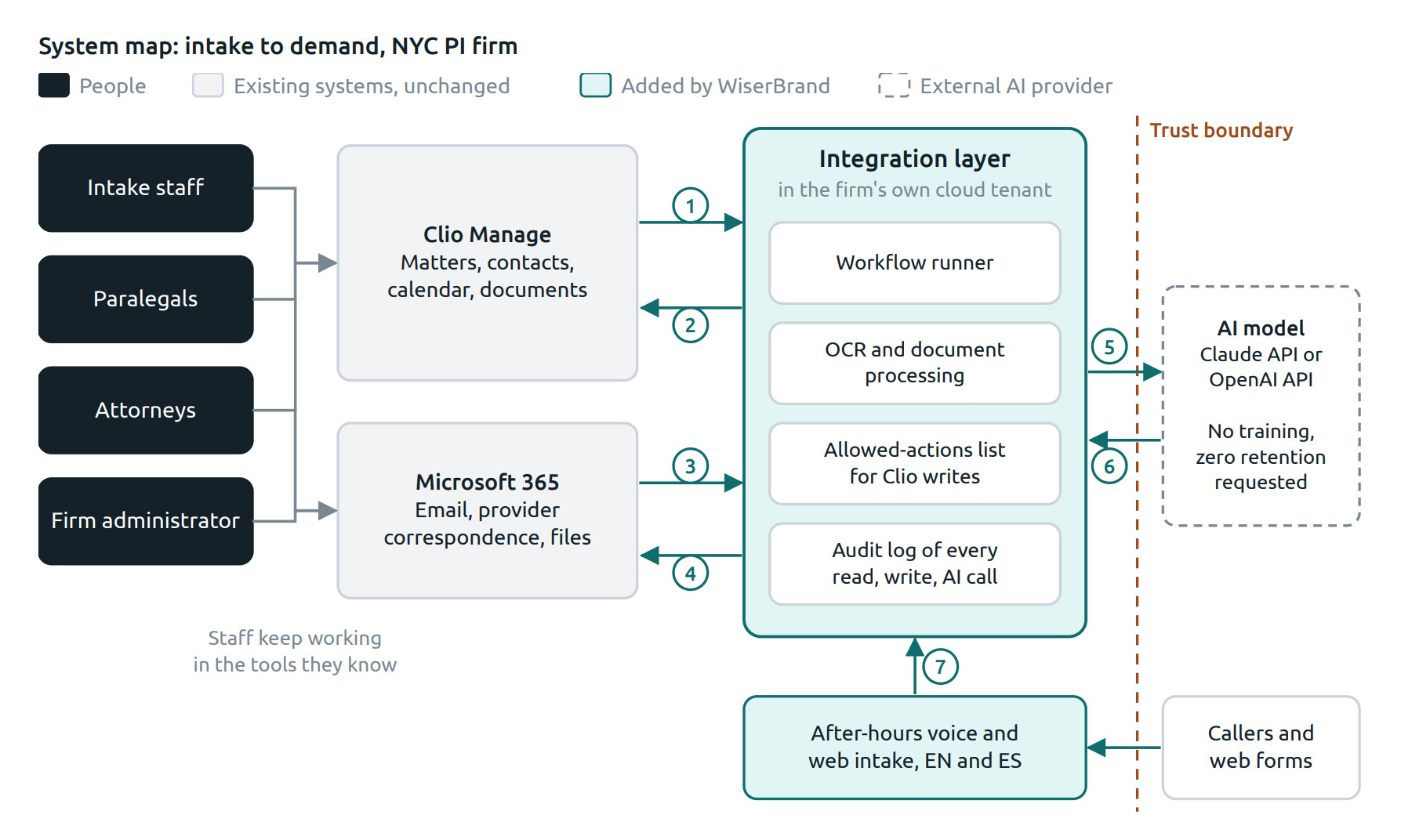
We designed five AI automations that work through Clio and Microsoft 365, the tools the team already uses. They answer after-hours calls, draft medical chronologies and demand letters, chase records, track deadlines, and keep matter status in a single view. People check every fact and make every legal decision.
Cooperation Period
12 weeks
Location
Industry
Service Provided

Business Challenge
Case volume had outgrown the admin team. Most of the lost time sat in work that needed no legal judgment at the step where it was lost:
- After-hours calls. Evening and weekend calls went to a voicemail box that was checked unevenly. Some callers never heard back, and injured callers usually contact more than one firm.
- Records to demand. Paralegals spent days compiling medical chronologies from hundreds of pages before a demand letter could be sent. Record requests were tracked in email and sticky notes.
- Deadlines and status. The 90-day Notice of Claim, no-fault deadlines, and statutes of limitations lived in people’s heads and a shared Excel file. A simple status question about a matter could take three people to answer.
The partners had two concerns about AI: invented facts reaching a filing, and client data leaving the firm’s control.
What We Did
1
Mapped where the hours went
- Two weeks of discovery with paralegals, intake staff, the firm administrator and two attorneys.
- We followed one matter from first call to demand letter and recorded who does each step, how long it takes and what goes wrong.
2
Designed five automations that work through Clio and Microsoft 365
- 24/7 intake, English and Spanish: answers and screens after-hours calls and web forms, runs a conflict check, and puts a qualified lead in Clio before the team arrives.
- Medical chronology and demand drafts: turns records into a dated chronology with page references and a first demand draft built from the firm’s past letters.
- Records chasing: logs each provider request, follows up on schedule and matches what arrives.
- Deadline tracking: pulls key dates from intake and documents, including the Notice of Claim, and adds them to the Clio calendar as unconfirmed.
- Matter status: one shared view of every matter’s stage and what it is waiting on.
3
Kept lawyers in charge
- A paralegal checks every date and figure against its page reference before an attorney sees a draft.
- The AI flags possible conflicts and computes deadlines. People clear conflicts and confirm dates.
- No training on firm data, no access to trust accounts, and Clio writes limited to a fixed list of allowed actions.
4
Planned a phased rollout
- Three waves over 12 weeks: back office first, then intake and deadlines, then case work. Attorneys’ own workflow changes last.
- Each wave runs alongside the old process for two weeks and has a pass mark. If it still misses after up to two weeks of fixes, the automation is switched off.
Project Results
What the plan is designed to change:
After-hours callers hear back
Calls and forms are answered and screened within minutes, so fewer viable cases go to the next firm on the list.
Demand packages move faster
Paralegals review chronologies and drafts instead of building them, so demands go out sooner.
Every deadline has an owner
Key dates are confirmed within a business day of intake, and a weekly Clio report lists any matter without a confirmed limitation date.
Paralegal time goes back to case work
Hours freed from chronologies, records chasing and status questions go to open matters, so the firm can take on more without a new hire.