Adaptive AI Development Services
Keep AI Decisions Current as Patterns Change
Demand shifts, customer preferences evolve, and unusual activity takes new forms. Models and rules built on older patterns can become less useful between planned updates. WiserBrand develops adaptive AI for forecasts, recommendations, and detection workflows that need to respond to those changes.
We connect current data and outcome feedback, monitor performance, and evaluate changes before release. Depending on the use case, an update may affect the data, decision rules, or model. Each update has defined criteria, an owner, and a recovery path.

4.9/5 client rating

Recognized growth company

Experience with GPT models

Experience with Anthropic models

AI Back-Office Automation for a Trucking Company
We helped a U.S. trucking company cut routine document processing from 20 minutes to under 30 seconds by turning broker paperwork and load data into one AI-powered workflow.
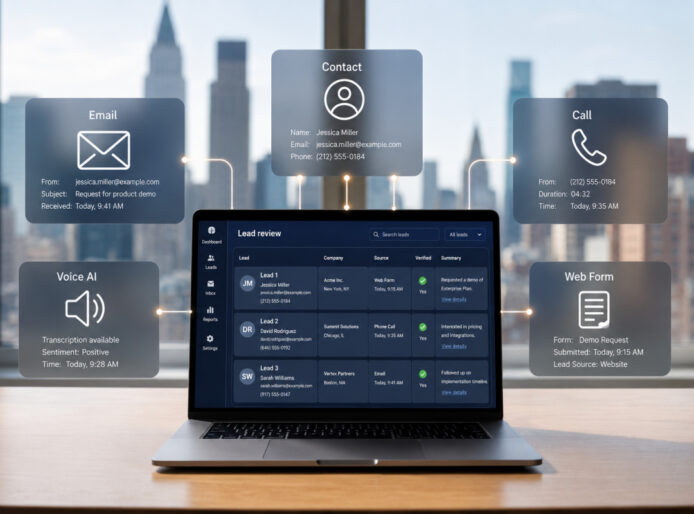
AI Doorman for Sales Teams
We built an AI intake system that filters, enriches, and summarizes leads before they reach CRM, cutting manual lead handling time by about 90%.

AI HR Assistant for a Large IT Company
We deployed an AI HR assistant that cut CV review time by 60% and saved a large IT company’s recruiting team approximately 20 hours per week.
Our Adaptive AI Development Services
We recommend adaptive AI when changing patterns measurably weaken decision quality and usable new signals can support improvement. We define the baseline, feedback source, and update path before selecting an approach. WiserBrand can deliver one capability or an end-to-end solution.

Adaptation Feasibility & Design
We assess how quickly the underlying patterns change, what that costs the business, and whether feedback arrives in time to improve the decision. The resulting design identifies what should change, how often, and who should approve it.
Includes:
- Comparison with the current model or update cycle
- Decision-level success measures and baseline
- Available feedback, its quality, and its delay
- Adaptation triggers, ownership, and roadmap

Data & Feedback Engineering
An adaptive system needs dependable signals about current conditions and past outcomes. We build pipelines that capture the inputs and later results for each decision, such as a demand forecast and the sales that followed.
Includes:
- Batch or real-time data ingestion
- Data quality and change detection
- Feature and outcome-feedback pipelines
- Access controls and data lineage

Models & Update Methods
We choose an update method that fits the decision and the pace of change. A recommendation system might adjust its ranking using recent interactions; other systems may need scheduled retraining or incremental learning. Candidate versions are evaluated before release.
Includes:
- Model selection and prototyping
- Drift detection and update criteria
- Evaluation against current baselines
- Stability and regression checks

Agents With Current Context & Feedback
Adaptive AI agents can use current knowledge, workflow state, and approved tools to handle variable tasks. We define how new information affects their responses or routing, which actions need approval, and how people take over when an agent encounters uncertainty.
Includes:
- Agent responsibilities and tool access
- Context, memory, and knowledge updates
- Workflow rules and escalation paths
- Task and failure evaluation

Feedback-Loop Integration
We connect each decision to the workflow where it is used and the outcome that follows. An anomaly alert, for example, can enter an analyst’s review queue, where its outcome is confirmed and captured. Integration design covers permissions, response times, and error handling.
Includes:
- API, event, database, and file connections
- Decision delivery and outcome capture
- Read and write permissions
- Logging and exception handling

Continuous Evaluation & Controlled Release
We implement MLOps for monitoring the decision’s quality and releasing changes safely. Teams can compare a candidate with the current version, review who approved it, observe its impact after rollout, and return to a previous version when needed.
Includes:
- Performance, data, and drift monitoring
- Model and configuration versioning
- Controlled deployment and rollback
- Audit records and human oversight
WiserBrand in Numbers
Adaptive AI projects draw on WiserBrand’s broader experience in software engineering, data, cloud infrastructure, quality assurance, and delivery.
Selected AI Development Case Studies
Explore WiserBrand projects that connect AI capabilities to business data, existing systems, and day-to-day workflows.


Discuss Your Adaptive AI Project
Adaptive AI Use Cases by Industry
Adaptive AI is most useful when new information can change a forecast, recommendation, or operational decision. The right update frequency and level of oversight depend on the industry, the available feedback, and the impact of a wrong decision.
Retail & eCommerce
Customer interests, product availability, and demand can shift quickly. Adaptive systems can refresh recommendations, improve product discovery, and update forecasts as new transactions and inventory data arrive.
- Potential uses: Recommendations, demand forecasting, search ranking, and inventory planning
- Relevant signals: Browsing, purchases, returns, catalog changes, promotions, and stock levels
- Key controls: Product eligibility, pricing rules, customer-data permissions, and performance monitoring

Financial Services
Transaction patterns and operational volumes change over time. Adaptive models can help teams identify unusual activity, forecast demand, and prioritize exceptions for review while retaining a clear record of decisions and model changes.
- Potential uses: Fraud alerts, anomaly detection, cash-flow forecasting, and document triage
- Relevant signals: Transactions, outcomes of investigations, account activity, and updated records
- Key controls: Audit trails, access limits, evaluation against false positives, and human review of consequential decisions

Manufacturing
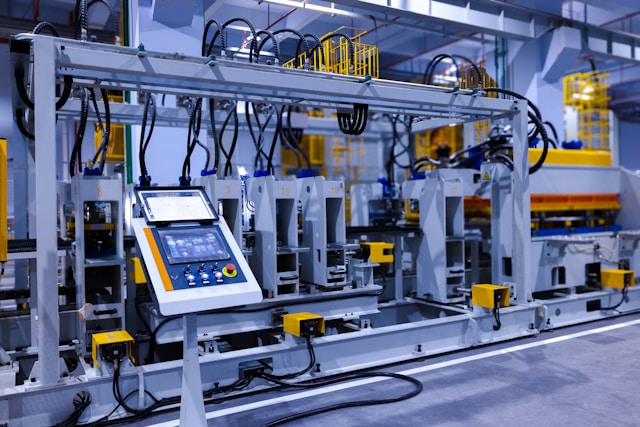
Equipment behavior and production conditions can vary across machines, sites, and seasons. Adaptive AI can use recent operating data to refine maintenance predictions or flag changes in quality patterns.
- Potential uses: Predictive maintenance, visual inspection, defect detection, and production forecasting
- Relevant signals: Sensor readings, inspection results, maintenance records, and production events
- Key controls: Operator review, safety limits, site-specific validation, and clear procedures when data is missing
Logistics & Supply Chain
Orders, capacity, transit conditions, and supplier performance can change throughout the day. Adaptive systems can update forecasts and recommendations as new events arrive, helping teams respond to exceptions with current information.
- Potential uses: Arrival forecasts, demand planning, route recommendations, and exception prioritization
- Relevant signals: Order status, shipment events, capacity, inventory, and delivery outcomes
- Key controls: Operational constraints, data freshness, dispatcher overrides, and fallback workflows

Real Estate & Property Management
Property teams manage changing maintenance demand, occupancy, inquiries, and vendor availability across multiple systems. Adaptive AI can help prioritize work and improve forecasts as current records and outcomes become available.
- Potential uses: Maintenance triage, workload forecasting, inquiry routing, and portfolio reporting
- Relevant signals: Work orders, property records, response times, occupancy, and vendor activity
- Key controls: Property-level permissions, tenant-data protection, and human review of decisions affecting residents

Types of Adaptive AI Solutions
Choose a solution by the decision it needs to improve. These examples show different ways fresh signals can change an output, with update methods and review controls matched to the task.

Adaptive Forecasting
Refresh demand, workload, or capacity forecasts as new observations arrive. Monitor forecast errors so teams can see when conditions have changed enough to warrant a model update.

Personalized Recommendations
Adjust product, content, or next-action rankings using recent behavior and available inventory or content. Business rules keep recommendations within approved boundaries.

Anomaly & Fraud Detection
Identify patterns that differ from expected activity and incorporate reviewed outcomes into future evaluations. Alert thresholds and false-positive rates are monitored as behavior changes.
Predictive Maintenance
Use current equipment readings and maintenance history to refine failure-risk estimates. Site-specific validation and operator review help turn predictions into useful maintenance decisions.

Dynamic Decision Optimization
Update recommendations for routing, scheduling, inventory, or resource allocation when inputs change. Operational constraints and approval rules govern which adjustments can take effect.

Adaptive AI Agents
Give agents access to current knowledge, workflow state, and approved tools so they can handle changing requests. Feedback can improve their context and routing; changes to their behavior or permissions follow a controlled review.

Why WiserBrand
WiserBrand’s broader software and data engineering experience supports adaptive AI delivery. We make the decision to adapt, the evidence for each update, and production ownership clear from the start.

Adaptive AI Feasibility Before Development

Data and Feedback Engineering in One Team
Updates Evaluated Against Business Baselines

Human Oversight, Staged Releases, and Rollback

Outcome Feedback From Existing Workflows

Documented Monitoring and Handover
Trusted by Leading Brands








Adaptive AI Development Engagement Models
The right engagement depends on what you have already built, the skills available in-house, and whether you need advice, a defined solution, or ongoing delivery capacity.
Strategic Consulting & Advisory
We assess feasibility, data readiness, adaptation options, risks, and the path to implementation. Your team receives a practical scope or roadmap without committing to a full build.
Project-Based Delivery
WiserBrand designs, builds, integrates, and launches a defined adaptive AI solution against agreed outcomes and acceptance criteria. The engagement includes operational handover.
Team Extension
Add adaptive AI engineers, data specialists, or MLOps expertise to a project led by your team. The specialists work within your delivery process and priorities.
Dedicated Development Team
A cross-functional team works with you on a continuing roadmap of adaptive AI capabilities, releases, and improvements. Scope and priorities can evolve as results and business needs change.
Share your use case, existing systems, data, and in-house capacity. We’ll help define a practical starting scope.
Our Adaptive AI Development Process
Our process defines how an adaptive system is built, evaluated, released, and updated after launch. The stage windows below are indicative; we confirm a schedule after reviewing data readiness, integrations, and approval requirements.
Define the use case and success measures
Specify data flows, update methods, and controls
Develop and integrate the system
Validate performance and safeguards
Deploy and establish operational ownership
Evaluate results and proposed changes
Align & Baseline
1 WeekWe examine the current workflow, the conditions that change, and the decisions the system should support. Your team and ours agree on the baseline, intended improvement, and scope.
- Approved use-case brief with users, decision owner, and scope
- Baseline for relevant quality, time, cost, or error measures
- Inventory of available data, feedback, systems, and dependencies
Design Adaptation
1–2 WeeksWe decide which parts of the system may change and how proposed updates will be evaluated, approved, and reversed if needed.
- Solution architecture and data-flow design
- Adaptation plan covering signals, update triggers, and review points
- Evaluation, permissions, release, and rollback plan
Build & Connect
4–8 WeeksWe develop the data pipelines, model or agent, application logic, and integrations, then test them in a representative workflow.
- Integrated candidate system
- Data and feedback pipelines with logging
- User interfaces, system connections, and human review paths
- Technical documentation for the delivered components
Test & Govern
2–3 WeeksWe compare the candidate with the baseline and test its behavior with stale, incomplete, and changing data. The review also covers access, exceptions, and recovery.
- Performance and business-measure evaluation report
- Drift, failure, and regression test results
- Release checklist and approval record
- Verified rollback procedure
Launch & Enable
1–2 WeeksWe release the system through an agreed rollout and prepare the people responsible for using and operating it.
- Monitored production release
- Alerts, runbooks, and named operational owners
- User guidance and support handover
Monitor & Improve
OngoingWe review production performance and business outcomes. Proposed changes are evaluated and released through the agreed controls.
- Regular performance and data-quality reports
- Evaluation records for candidate updates
- Change history and prioritized improvement backlog
Technology Behind Adaptive AI Systems
We select components based on data cadence, response time, privacy, operating effort, and your existing stack.
Models & Adaptation Methods
We select forecasting, ranking, anomaly detection, language, or agent capabilities to fit the task. Depending on the evidence, adaptation may use incremental learning, scheduled retraining, updated retrieval, or revised decision rules.
- OpenAI
- Anthropic
- xAI
- Google Gemini
- Self-hosted models
Data & Feedback Infrastructure
Current data is useful only when its quality and meaning are understood. Pipelines collect new signals and outcomes, preserve their source and timing, and make them available for evaluation or model updates.
- Batch pipelines
- Event pipelines
- Validation checks
- Feature stores
Orchestration & Application Logic
The application layer routes inputs to models or rules, maintains agent state, and coordinates tools. It also handles timeouts, retries, and unavailable services.
- Workflow services
- State management
- Rule engines
Integration & System Access
Adaptive AI must exchange information with the systems that hold current records and carry out work. Each connection defines authentication, permitted actions, error handling, and logging.
- APIs
- Webhooks
- MCP servers
- Secure file exchange
Cloud, Runtime & Delivery
The runtime follows your infrastructure standards and the system’s workload, availability, and data-handling requirements. Deployment design covers environments, secrets, scaling, staged releases, and recovery.
- Cloud
- Private infrastructure
- Deployment pipelines
Adaptive AI Integrated With the Systems Your Team Uses
Adaptive AI needs access to current information and a way to return useful results to the workflow. We connect data sources, business applications, and feedback channels while defining permissions, data freshness, and permitted read or write actions.

CRM & Sales
- Salesforce
- HubSpot
- Zoho CRM
- Pipedrive
eCommerce
- Shopify
- Adobe Commerce (Magento)
- WooCommerce
- Shopware
Support
- Zendesk
- Gorgias
- Intercom
- Freshdesk
Finance & Accounting
- QuickBooks
- Xero
ERP & Business Operations
- Odoo
- Oracle NetSuite
Legal
- Clio
- Filevine
- MyCase
Productivity
- Gmail
- Outlook
- Google Sheets
- Microsoft 365
- Microsoft Teams
- Slack
Get started with WiserBrand
Let’s begin your project journey
Prompt Response
We’ll contact you within 24 business hours to discuss your project
Exploratory Call
A 15-20 minute call to discuss your needs and goals
Tailored Proposal
Receive a custom proposal with recommended next steps
or
Pick a time that works for you, and let’s hop on a call
Frequently Asked Questions
Answers to common questions about AI agent development, integration, cost, performance, and long-term support.
It is worth considering when conditions change faster than your current update cycle and those changes measurably affect decisions. Examples include shifting demand, evolving fraud patterns, or changing equipment behavior.
We first compare the value of faster adaptation with its data, evaluation, and operating costs. A fixed model with scheduled retraining may be the better choice when changes are slow or the feedback is limited.
That depends on the problem. A system might refresh the information it retrieves, adjust a forecast, update decision rules, change an agent’s available context, or release a new model version.
We define each permitted change and its evaluation requirements before the system goes live. “Adaptive” does not mean every component changes automatically.
No. A system can process current data without changing its model after every event. Updates may happen continuously, on a schedule, or only when monitoring shows a meaningful change.
The appropriate pace depends on how quickly the business problem changes, when reliable feedback arrives, and how much review an update requires.
We monitor both incoming data and the system’s results. A shift in input data is a signal to investigate; by itself, it does not prove that the model’s decisions have become worse.
Update criteria can combine outcome measures, error patterns, reviewed samples, and operating thresholds. We compare a proposed change with the current version before releasing it.
Delayed feedback affects how quickly a model can be evaluated and updated. We track which outcomes are confirmed, avoid treating unverified signals as ground truth, and use interim monitoring where it is useful.
If the workflow does not capture outcomes today, the first step may be to establish that feedback path.
Proposed updates are tested against agreed measures and relevant historical or recent cases. Depending on the use case, we can also observe a candidate without affecting live decisions or release it to a limited scope first.
Version records, approval points, and rollback give operators a way to stop or reverse a change that performs poorly.
Often, yes. We review the existing model, data pipeline, evaluation results, integrations, and operational constraints to see what can be retained. The work may focus on better feedback, monitoring, and controlled updates rather than replacing the model.
If the current design cannot support the required changes reliably, we explain which components need to change and why.
Your team should have named owners for performance review and production changes. We define which updates can follow preset rules and which require human approval, then document monitoring, escalation, and rollback responsibilities.
WiserBrand can support ongoing improvement or hand the operating process over to your team, depending on the engagement.
The main factors are data and feedback readiness, integration complexity, the type and frequency of updates, evaluation requirements, and the controls needed in production. The process stages above provide indicative time windows; we confirm a schedule after reviewing the use case.
An estimate should also identify recurring model, infrastructure, licensing, and support costs separately from development.