Summary

Business Challenge
A single parts request could combine a SKU, OEM number, brand, technical attributes, and a specific vehicle make, model, year, and modification. Managers had to reconcile these details across multiple records and confirm that the stored fitment data supported the match.
Catalog audits and new product preparation involved similar record-by-record checks for missing or conflicting attributes. Order inquiries added a parallel process: pulling up the full order record before a support manager could respond or escalate the issue.
What We Did
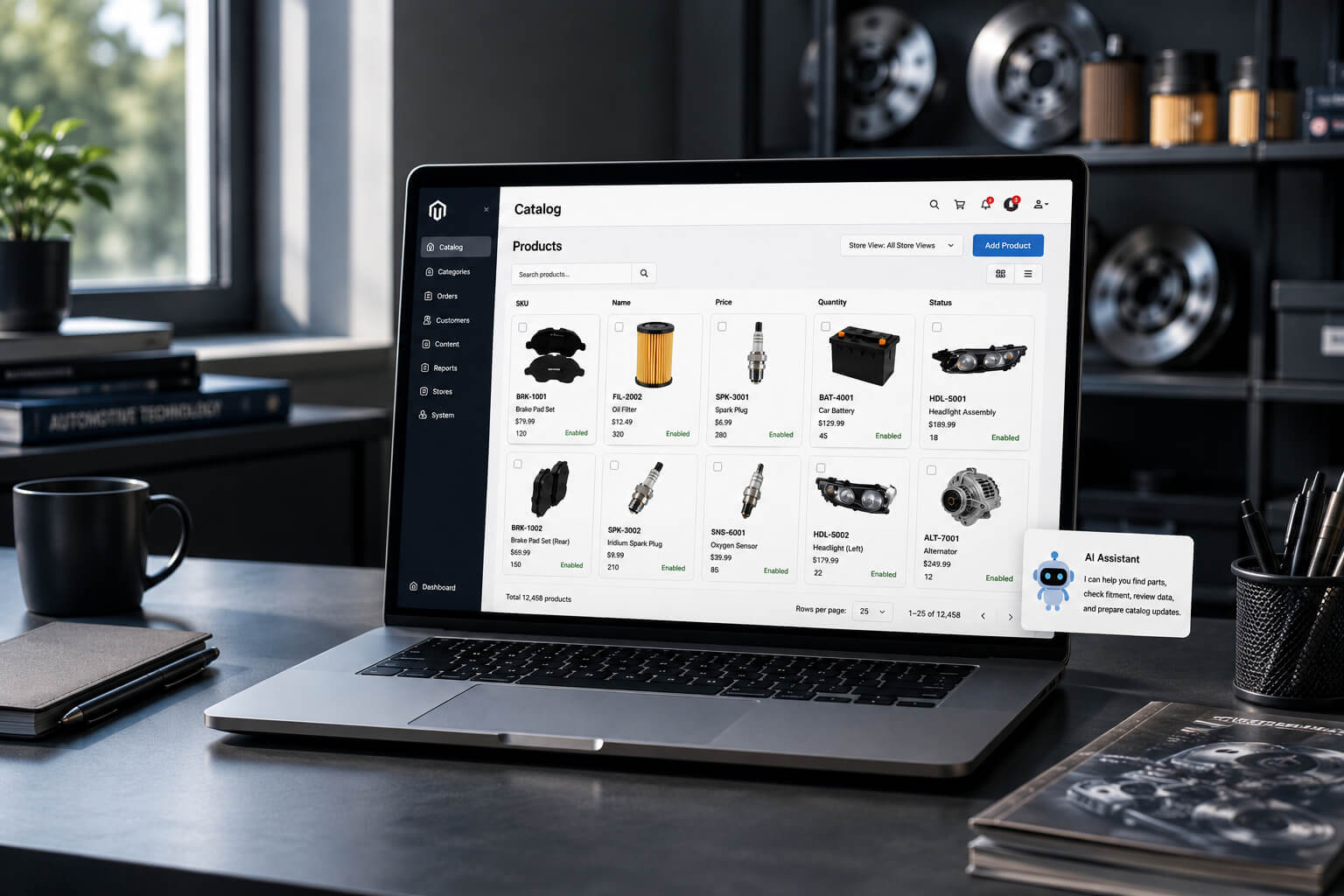
The solution covered three Magento workflows: catalog operations, fitment checks, and order review. A custom MCP server exposed predefined tools mapped to permitted Magento queries and actions. For each request, the model selected the appropriate tool, the agent invoked it, and the server returned structured Magento data. Every catalog change required manager approval before taking effect, and on the order side the agent only retrieved and drafted, never carrying out an order action itself.
1
Catalog and Fitment Operations
The agent could:
- Find parts by SKU, OEM number, brand, or category
- Search parts by vehicle fitment
- Retrieve and compare available fitment data
- Flag missing, conflicting, or potentially incorrect attributes
- Surface potential duplicate listings
- Check prices, stock levels, and product statuses
- Compare specifications across similar parts
- Draft technical specifications from existing product data
- Assemble bulk catalog updates for manager approval
2
Order Operations
The agent could also:
- Find orders by number, customer email, or status
- Check order contents, payment, and fulfillment status
- Identify orders stalled at a specific stage
- Prepare concise order summaries for support managers
- Draft customer responses about order status
- Escalate unusual or higher-risk cases to a manager
3
How a Fitment Request Worked
For a fitment check, the agent compared the candidate part’s stored fitment data against the specified vehicle. It flagged discrepancies, such as a year range that did not align or missing data for the specified modification, and passed the result to a manager for final confirmation.