Summary

Business Challenge
Four areas needed attention:
- Category pages gave shoppers little buying guidance. Most used a shared template.
- The category tree did not cover specific furniture searches that needed their own landing pages.
- The site carried technical debt: scripts over 2 MB, duplicate category pages, indexing issues and gaps in internal linking.
- Manufacturer product descriptions varied in quality, and the team needed a consistent way to assess them and to track the brand’s presence across AI platforms.
What We Did
1
Technical SEO and Internal Linking
Our review found JavaScript snippets with payloads over 2 MB. Scripts for custom forms were loading on category and product pages that did not need them, so we recommended loading them only where forms are used.
We also added internal linking blocks between category and product pages, fixed redirects and broken pages, optimized meta tags, removed duplicate category pages, enhanced product structured data, and repaired broken backlink destinations.
2
Category Content That Helps Shoppers Choose
We replaced template copy with content written for each category. It pairs relevant keywords with practical advice on choosing pieces and designing a room, in line with the retailer’s luxury and designer positioning.
3
Expanded Category Coverage
In the first iteration, we created more than 1,000 filter-based, indexable landing pages to cover more specific furniture searches. Only selected pages were indexed, and routine filter combinations were excluded from the index.
4
A Repeatable Product Content Workflow
We built a dashboard to evaluate product descriptions and prioritize updates. Some descriptions were empty or irrelevant, while others contained typos and stray AI-generated text.
Working with the client’s team, we developed a writing guide and built a generation workflow that combines product image recognition, specifications, the agreed writing style and SEO requirements.
5
AI Visibility and Channel Reporting
A custom dashboard built on DataForSEO tracks brand citations, mentions and competitor visibility across major AI platforms. We combined this with SEO data from Ahrefs so the team could review search and AI visibility together.
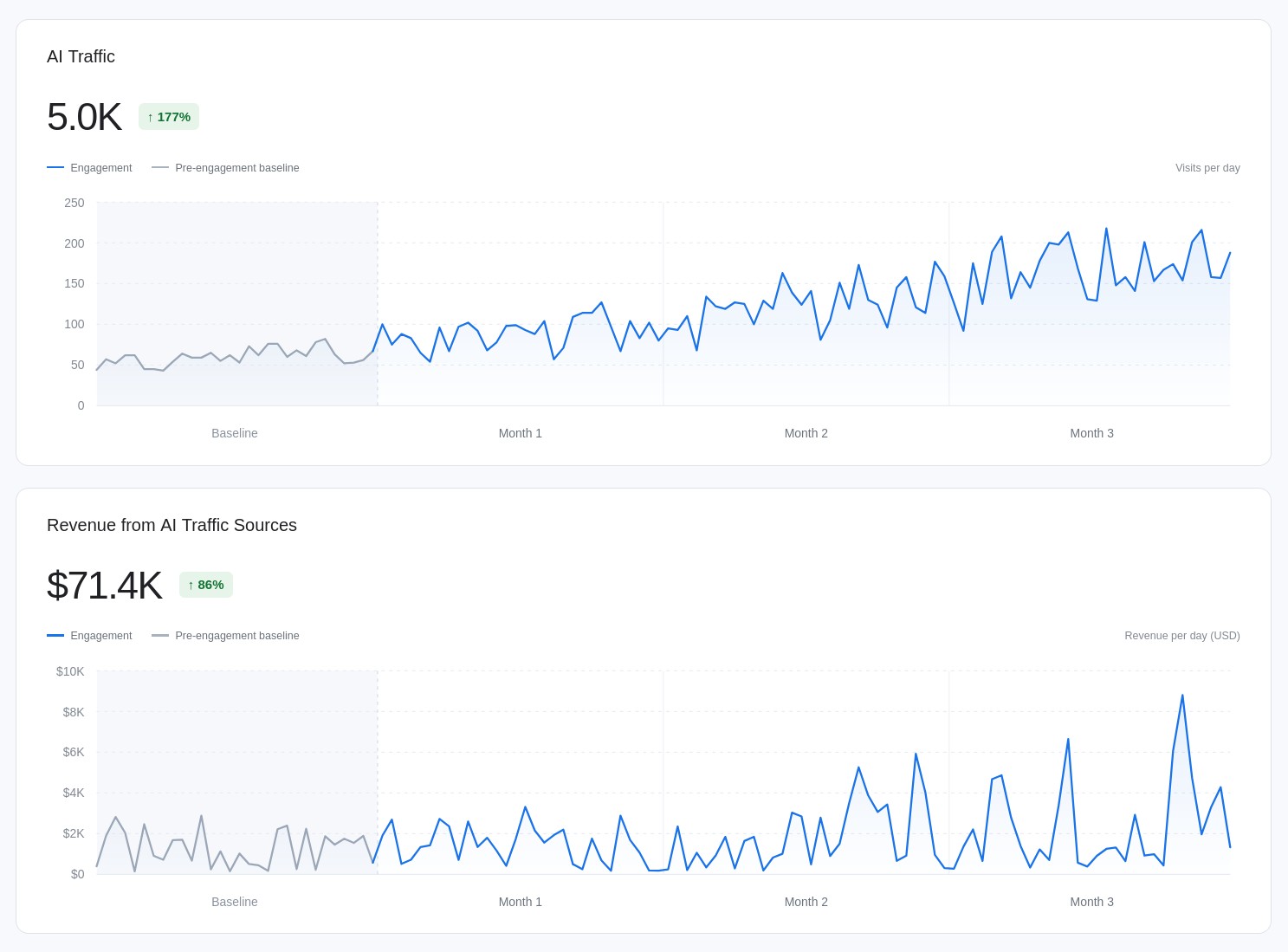
In GA4, we created predefined comparisons to filter out identified bot traffic and distinguish AI advertising from organic AI referrals.
6
Links from Existing Brand Mentions
We found third-party mentions of the retailer that did not link to the store, and asked those publishers to add a link. Fewer than 5% of outreach attempts succeeded, but the work still secured more than 30 backlinks from high-traffic pages or authoritative platforms, including well-known national publications.

